An autonomous robot depends on more than the quality of its AI. Cameras, sensors, onboard computers, communication interfaces and power systems all have to work together. That’s why we’re not building Invelogy Patrol entirely around off-the-shelf electronics. We’re also designing hardware that fits the needs of our robotic platforms.
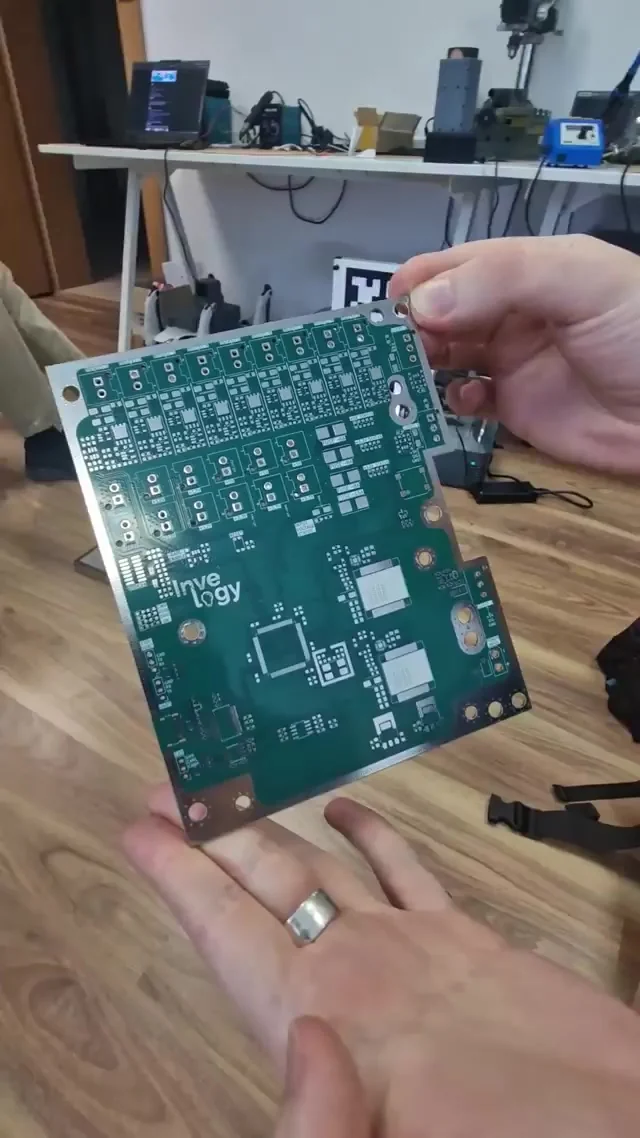
In late July 2026, we received a new batch of custom printed circuit boards (PCBs), designed in-house by the Invelogy team. The first boards have been powered up, and integration with our robotic platform is underway. It’s an important engineering milestone as we work towards a more cohesive, adaptable system architecture.
One board connecting multiple systems
When people see a robot, they usually notice the visible parts: how it moves, what it sees and what it can do on its own. Behind those capabilities is an equally important challenge: getting different electronic devices and subsystems to communicate reliably.
Our new control boards are designed to act as a central communication hub for the robot and its connected peripherals. They give us a dedicated foundation for bringing together sensors, computing modules and other hardware interfaces as the platform evolves.
Designing the boards ourselves also allows us to plan around the physical constraints of the robot: connector placement, wiring, access for maintenance and room for future expansion. Instead of shaping the whole system around a generic board, we can shape the electronics around the system we’re building.
Why we’re investing in in-house electronics
Off-the-shelf components are valuable tools, especially during early prototyping. But as a robotics platform becomes more complex, relying exclusively on general-purpose modules can introduce limitations in integration, layout and long-term development.
With custom boards, we gain more control over the architecture: which interfaces are available, how peripherals connect, how components fit together and how communication and power-related requirements are addressed in the overall design.
The long-term goals are practical: make integration easier, simplify maintenance and create a clearer path for adding capabilities without redesigning everything from scratch. That doesn’t mean a new PCB automatically makes a robot more reliable. Performance and reliability improvements still need to be demonstrated through testing.
From design files to the first power-up
There’s a moment in hardware development when the project stops being a set of design files and becomes something you can hold. In the accompanying video, you can see our team examining the newly arrived boards and taking a closer look at the electronics inside the robotic platform.
The first power-up is a milestone, not the finish line. Once the hardware is live, the real integration work continues: checking communication with connected devices, validating behaviour under different operating conditions and testing how the board works as part of the wider robot.
Each development cycle gives us another opportunity to identify issues early, make changes and bring the platform closer to real-world requirements.
What this means for Invelogy Patrol
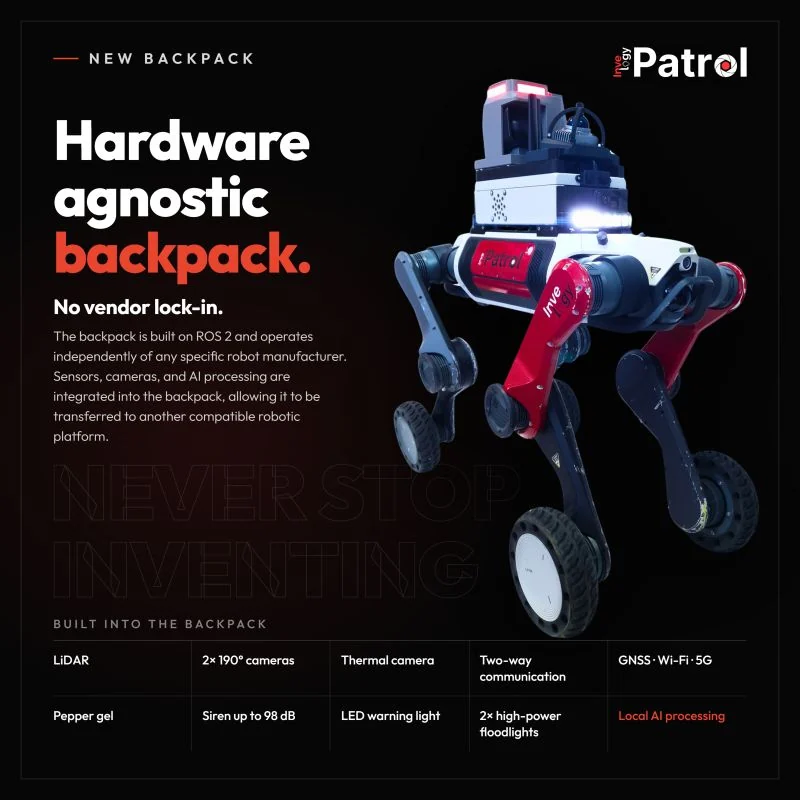
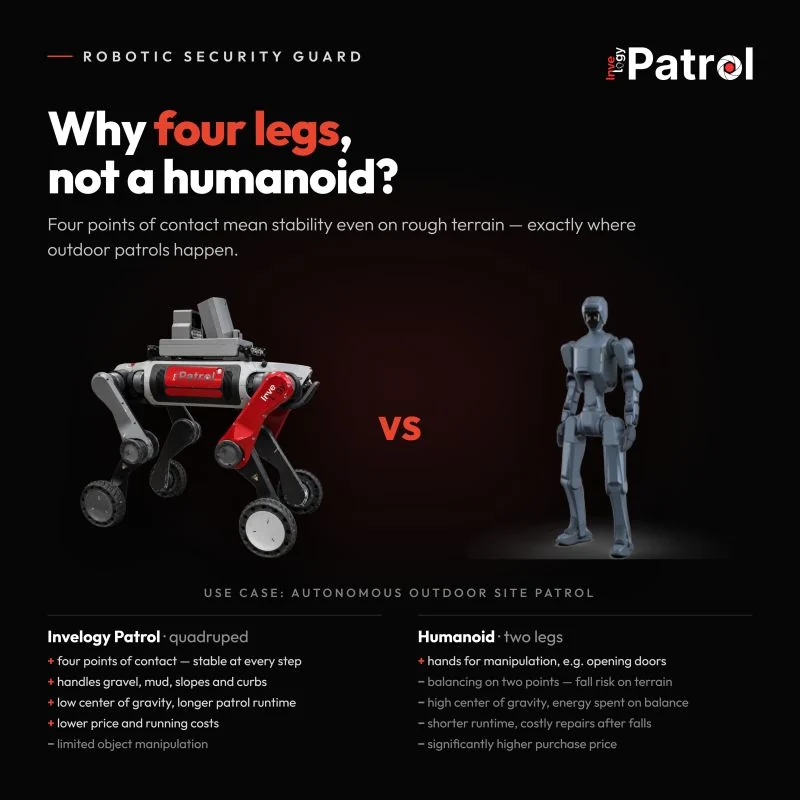
Invelogy Patrol brings together robotic mobility, sensing, AI and software for autonomous security patrols. A key part of our approach is to make those components work as a coherent system without unnecessary dependence on any single hardware vendor.
Our custom control boards support that direction. They may not be the most visible part of the robot, but they form part of the underlying architecture that makes future integration possible. Choosing capable sensors is only one side of the equation; connecting and managing them effectively matters just as much.
The current phase is focused on integrating and testing the first boards. We’ll share more as we validate their operation on our robotic platforms.
Innovation, one engineering iteration at a time
A small-looking PCB represents countless decisions about the structure of a larger system. Every prototype moves us forward, but also gives us new questions to investigate. That’s an essential part of building robotics technology intended to work beyond the lab.
If you’re working in industrial automation, autonomous robotics or physical security, we’d be glad to discuss potential applications and partnerships.