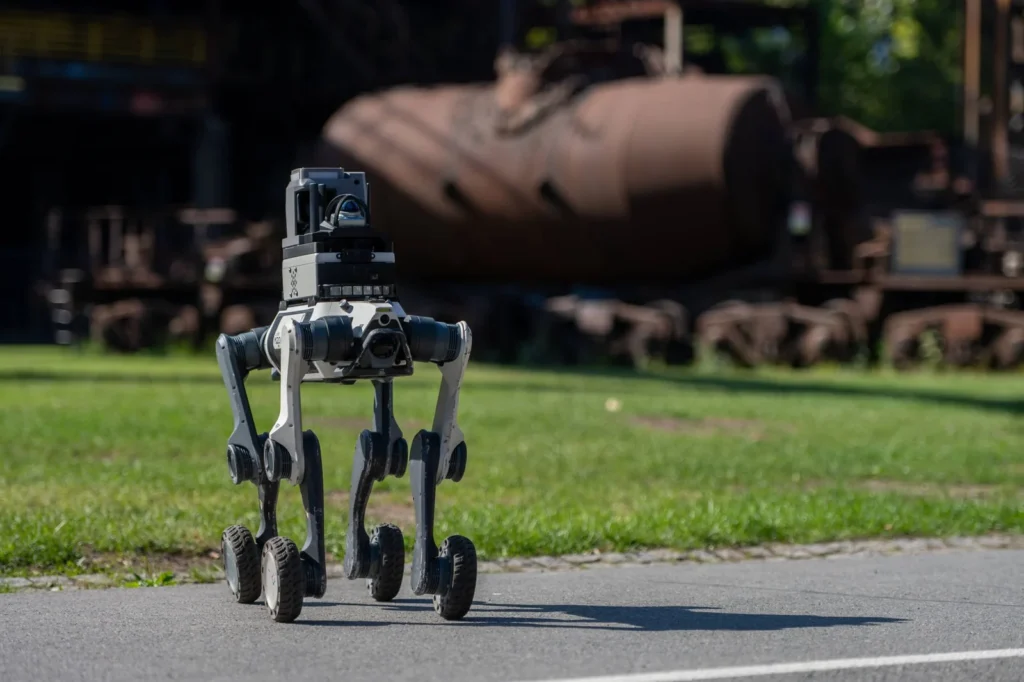
What if upgrading a security robot did not mean rebuilding its entire security system? That is the idea behind our new Invelogy Patrol backpack: a modular payload that brings together sensing, communications and on-device AI processing in a package designed for different robotic platforms.
For autonomous security patrols, mobility is only part of the equation. A robot also needs to observe its surroundings, provide useful information and support human operators when something requires attention. We designed our backpack so those core security functions do not have to depend on the cameras or computing hardware supplied by a single robot manufacturer.
Why we are building beyond a single robot platform
Many robotic systems rely heavily on the sensors, cameras and onboard computers chosen by the platform manufacturer. That can make initial integration convenient, but it can also limit how a security application evolves over time.
Our approach is to develop the security payload as a distinct, reusable technology layer. Instead of rebuilding our detection and communication stack whenever the underlying robot changes, we aim to adapt the same core system to a different compatible platform.
That flexibility matters in real deployments. A customer may need a compact robot for one location and a more capable platform for another. The choice of mobility hardware should not automatically dictate the security functions available to them.
ROS 2 provides the integration foundation
Our software architecture is built around ROS 2 (Robot Operating System 2), a widely used framework for connecting robotic components and systems.
ROS 2 helps us structure how sensors, software and robotic platforms communicate. But there is an important distinction: ROS 2 support does not make every robot instantly plug-and-play compatible. Each integration still requires work on mechanical mounting, power, communication interfaces, control and testing.
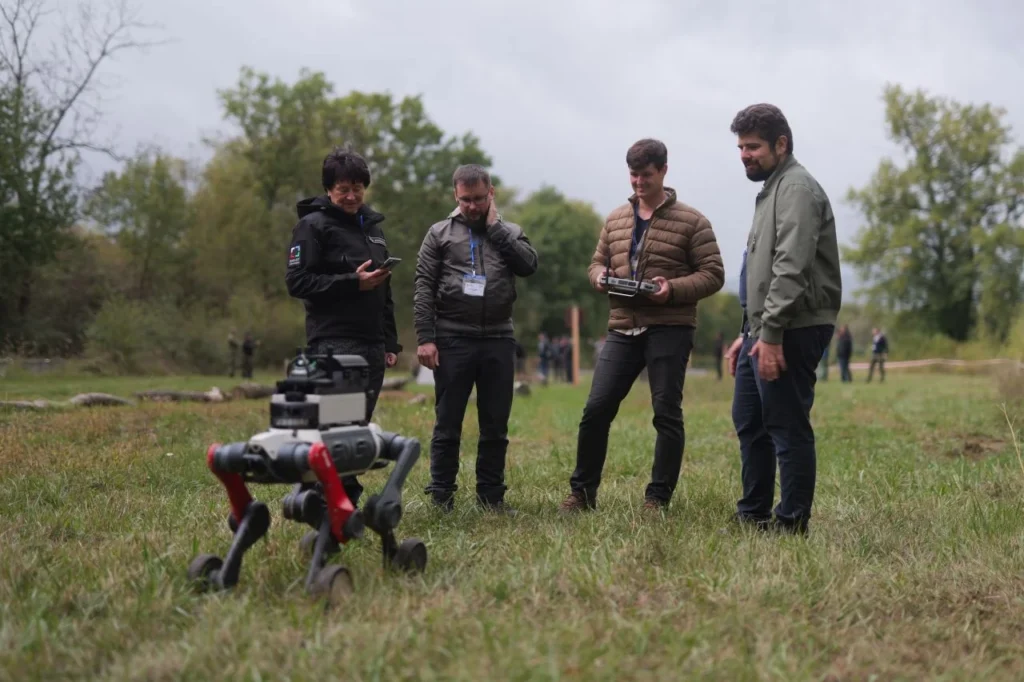
We have already tested this approach on the Unitree Go2 and DEEP Robotics M20. Working with two different platforms gives us practical insight into what we can standardize and which elements must be tailored to each robot.
What is inside the backpack?
Rather than relying solely on a robot’s built-in security sensors, the backpack carries its own set of components:
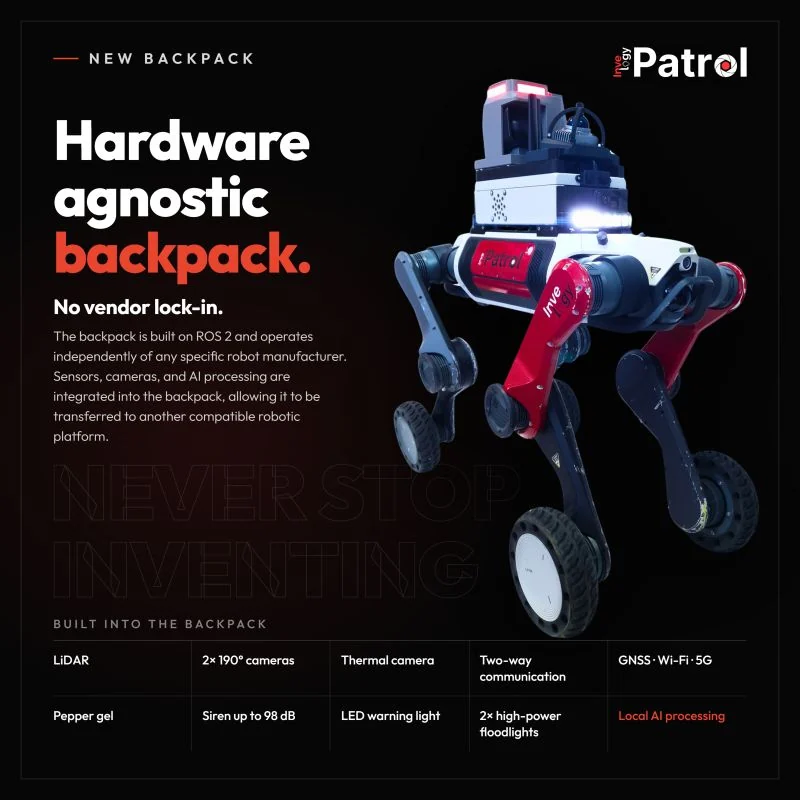
- LiDAR for spatial sensing and environmental awareness.
- Two 190° wide-angle cameras for broad visual coverage.
- A thermal camera for observing temperature differences and potential anomalies.
- Two-way audio so operators can communicate with people near the robot.
- GNSS, Wi-Fi and 5G connectivity and positioning options, depending on the operating environment.
- A siren rated at up to 98 dB and an LED warning light for audible and visual alerts.
- Two high-power floodlights to illuminate areas during inspections or patrols.
- A pepper gel module as an active-response component, subject to the relevant legal, safety and operator-control requirements.
- Local AI processing on the backpack itself.
The objective is not simply to attach more accessories. Each component contributes to a more useful operational picture and gives the security system a clearer role during a patrol.
On-device AI, where it matters
For security applications, where data is processed can be as important as what is being detected. Our architecture is designed to run core AI workloads locally on the backpack, rather than requiring every image or event to be sent to a remote cloud service before analysis.
This approach can reduce dependence on network connectivity for certain tasks and provide a foundation for timely detection. Remote connections still play an important role in operator oversight, system management and reporting. Actual detection performance will always depend on the AI models, deployment conditions and validation results.
The robot can change. The security intelligence stays.
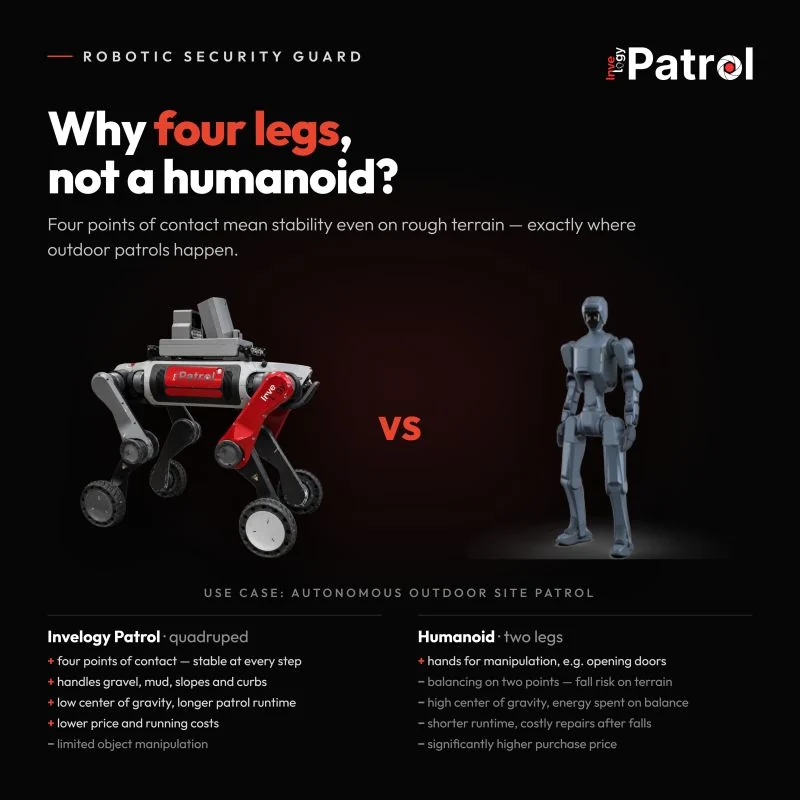
Consider two security sites with very different physical requirements. One might be well suited to a smaller quadruped; another might require greater payload capacity or different mobility characteristics.
We do not want to design an entirely new security product for each scenario. Our goal is to keep the security layer adaptable while selecting the robotic platform that best fits the environment.
This separation can also make future upgrades, servicing and further development more manageable. It does not eliminate integration work, but it creates a more flexible starting point for it.
Building the next generation of Invelogy Patrol
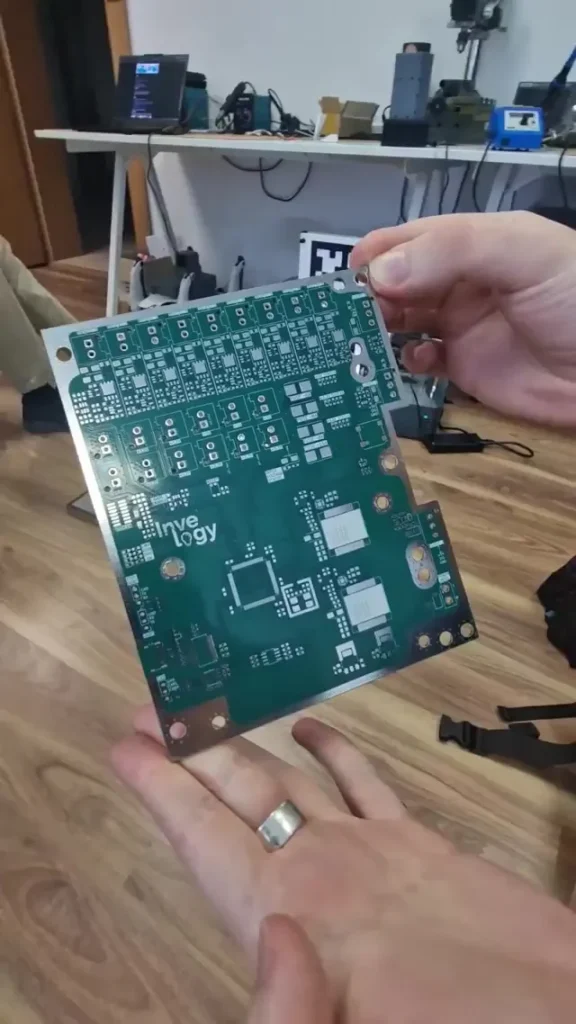
The backpack represents another step in our development of Invelogy Patrol. We are testing the system across platforms, integrating custom hardware and refining the capabilities needed for practical robotic security patrols.
Real-world testing remains essential. A convincing demo is not the same as a dependable field deployment, and every iteration helps us understand what needs improvement.
The robot can change. The intelligence stays Invelogy.
If you are exploring autonomous robotic patrols for an industrial site, logistics facility or another secured location, we would be glad to discuss the right setup for your environment.