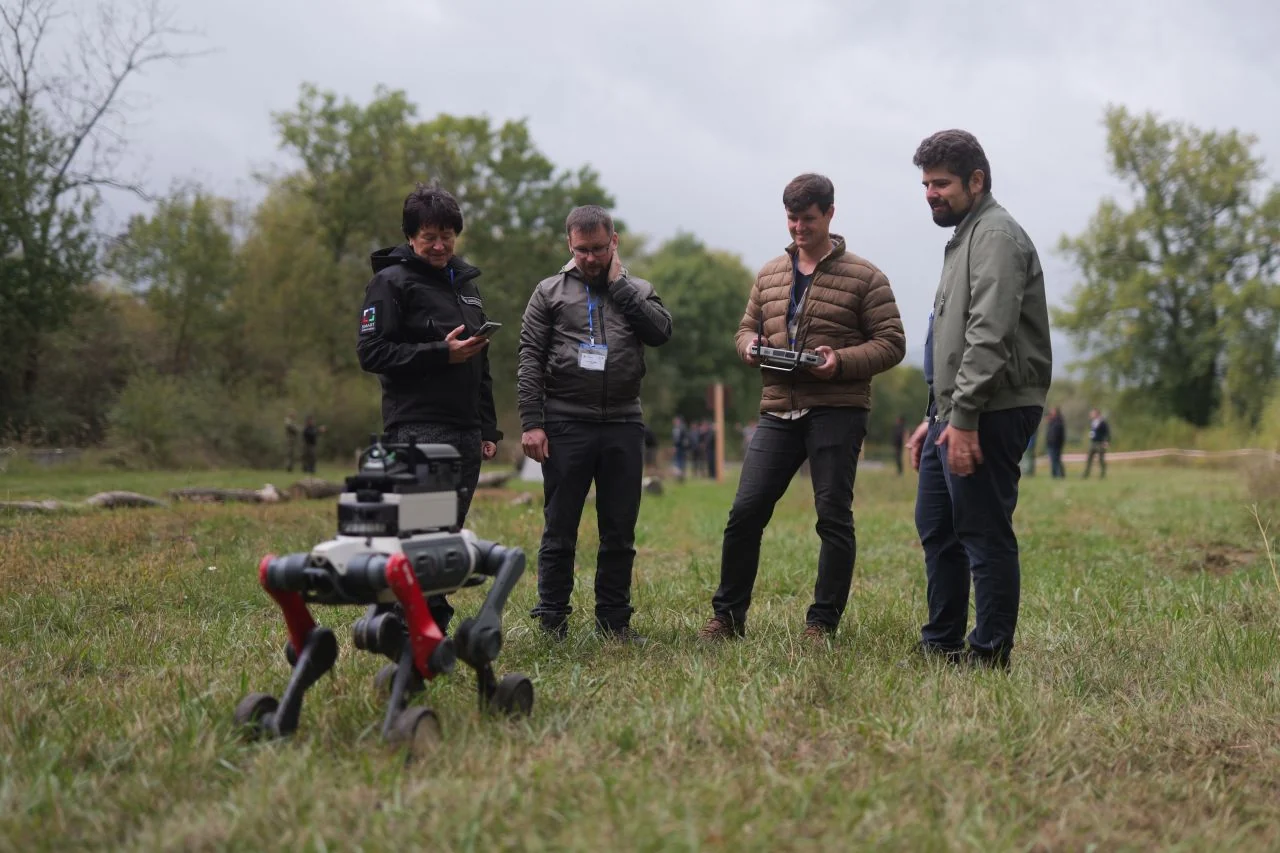
A robot designed to patrol industrial sites needs to handle more than a perfectly flat floor. Loose ground, mud and steep inclines can quickly reveal the difference between a polished demo and a robotic platform that can be developed for real-world use.
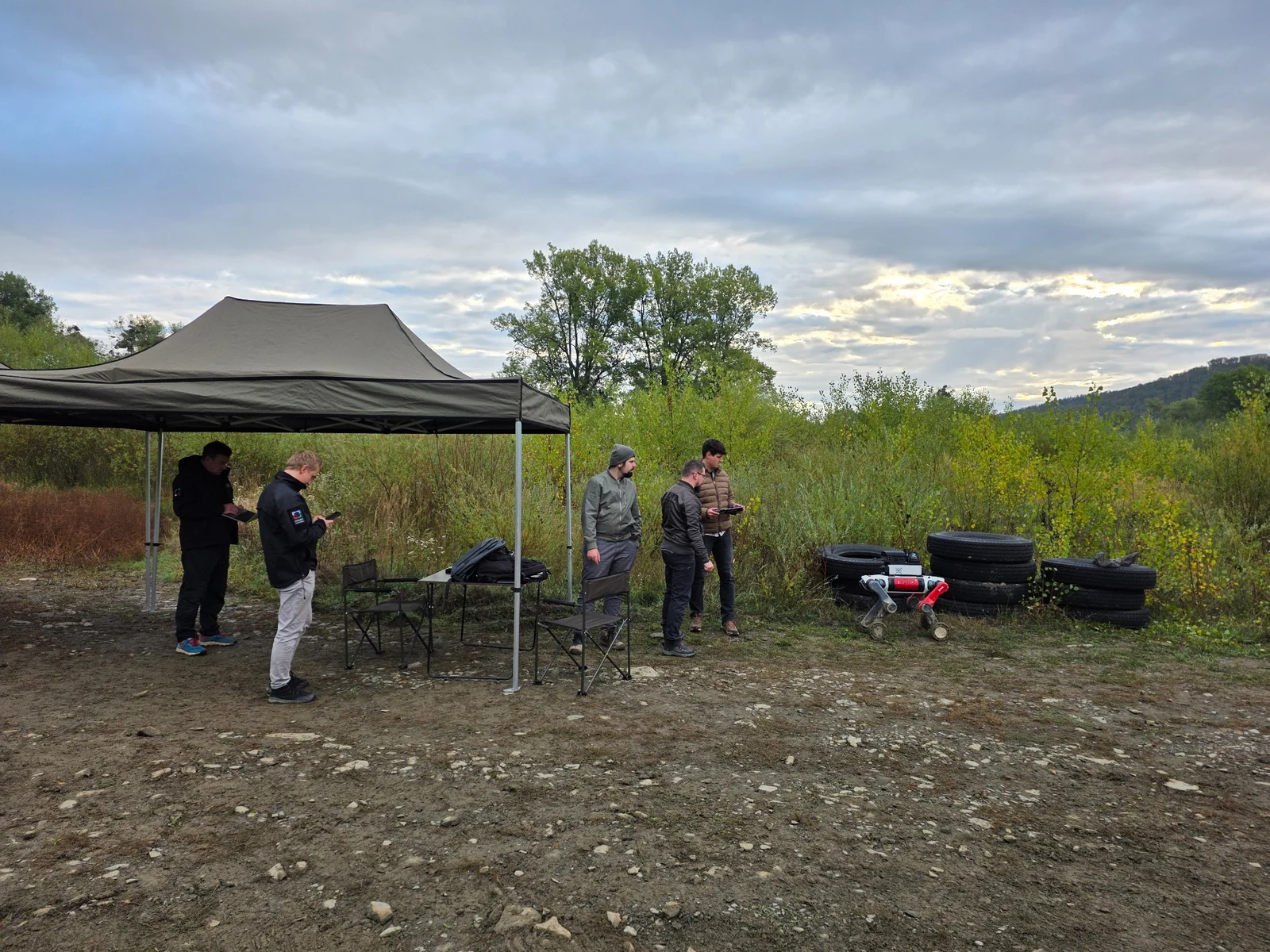
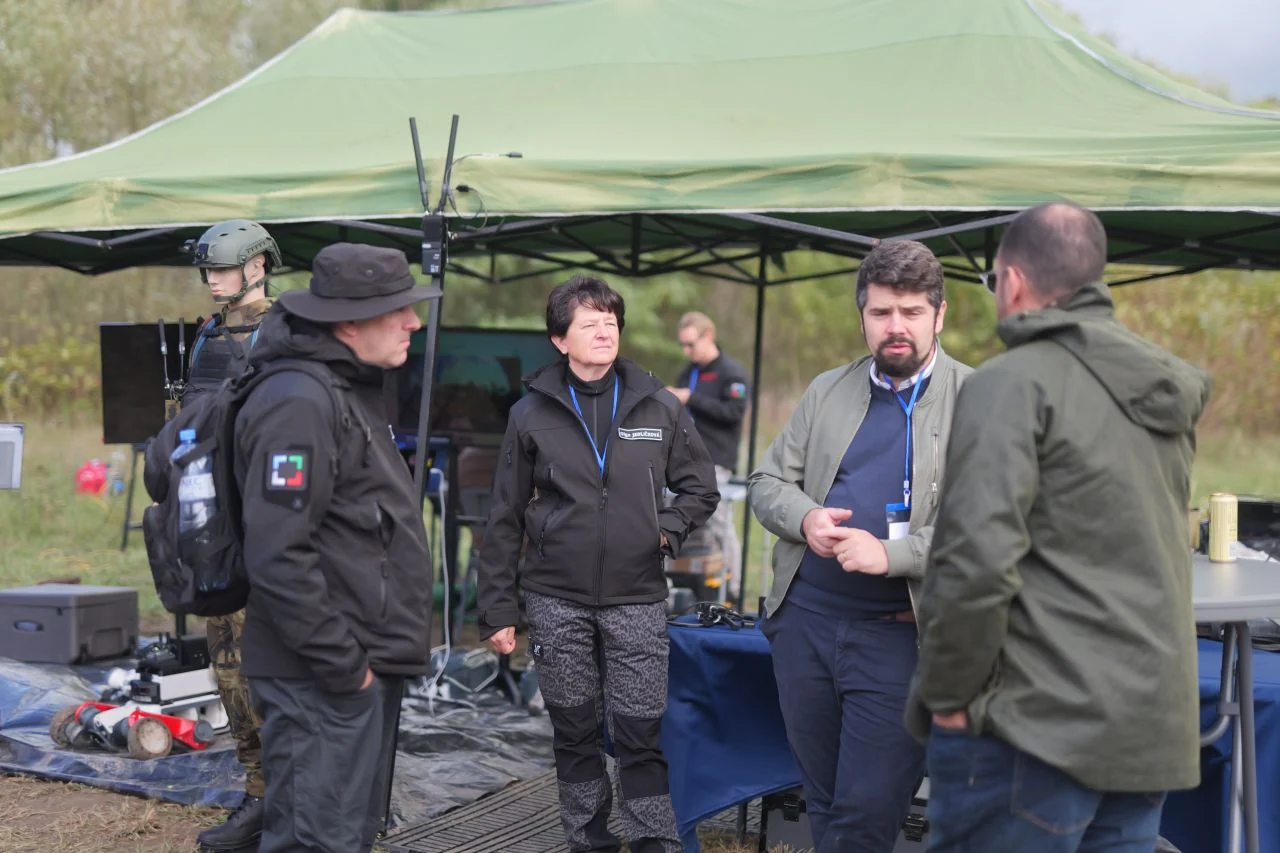
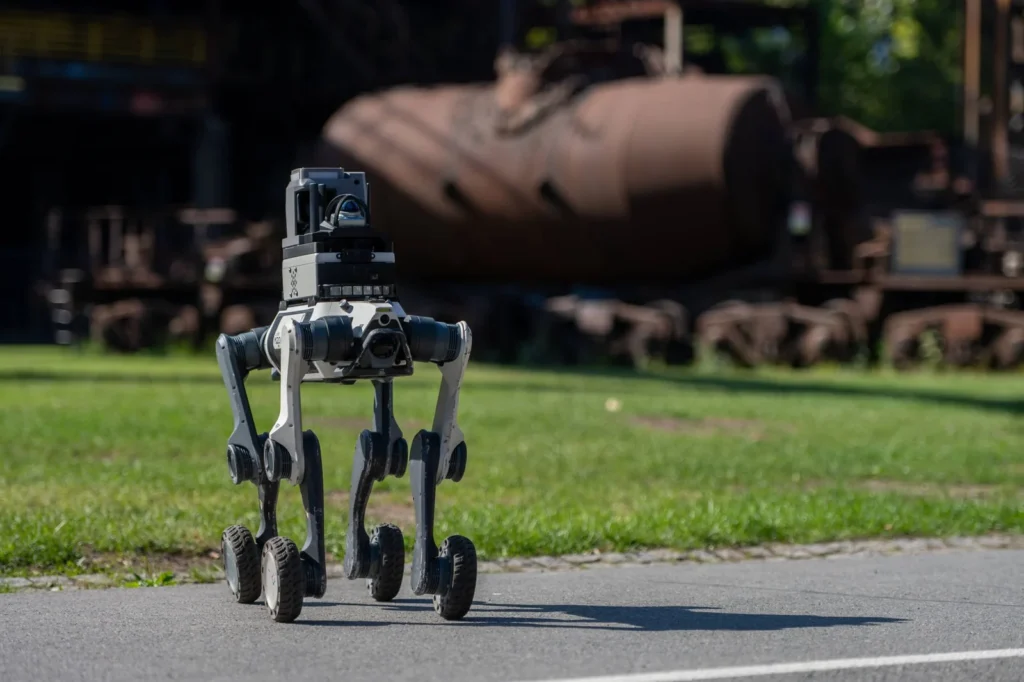
That is why we joined our Czech integration partner, Smart Informatics, at an outdoor testing site near Lipník in the Czech Republic. We put the Invelogy M20, built on a DEEP Robotics platform, through a series of challenges far removed from controlled laboratory conditions.
Beyond the lab: Obstacles, uneven ground and steep slopes
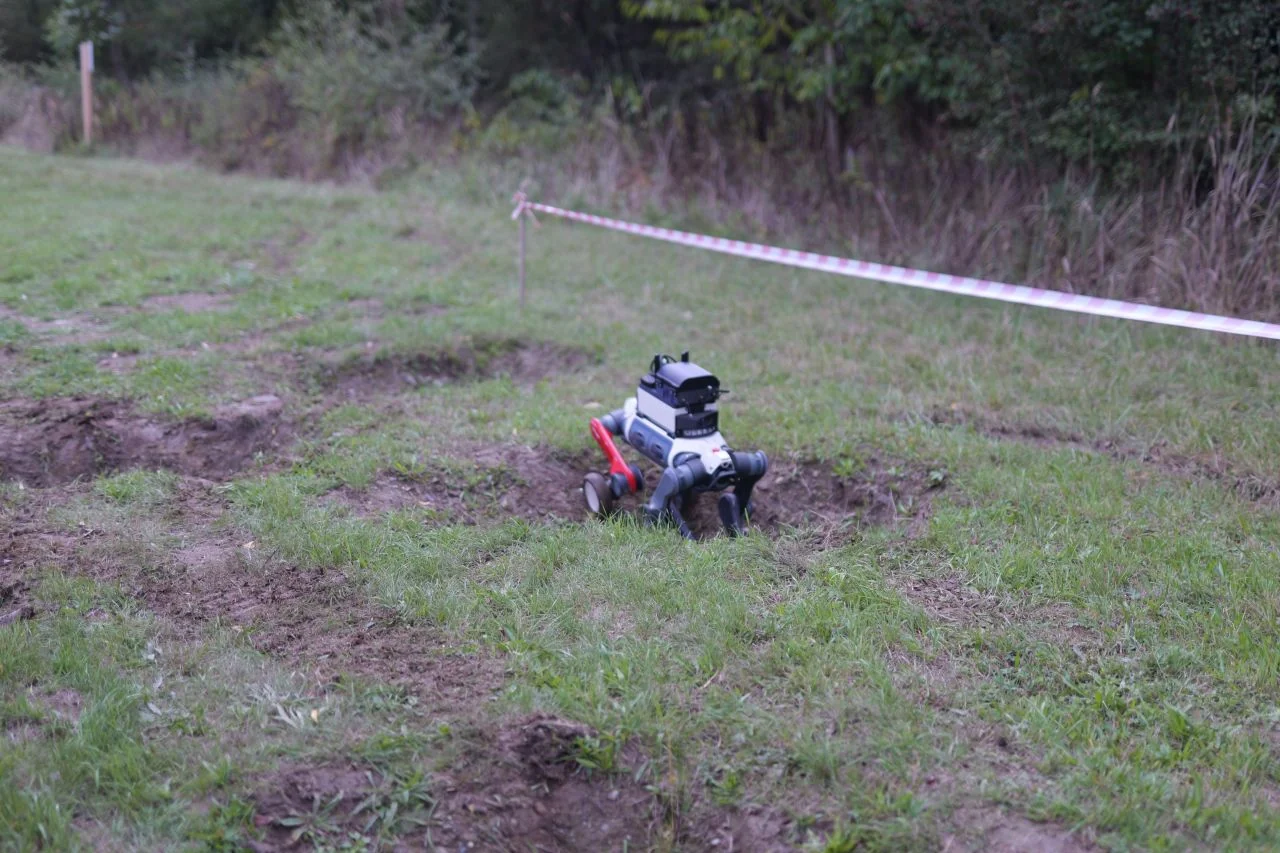
Our tests focused on four areas: mobility on rough terrain, gradients of up to 45°, stability and traction in muddy conditions, and the performance of our autonomous navigation system outdoors.
The challenge with field testing is that conditions change continuously. A firm surface may give way to slippery soil within a few metres. Wheels can lose traction, the chassis shifts over uneven ground, and the robot must maintain controlled movement throughout. These are exactly the kinds of variables that matter when planning outdoor security patrols.
The footage shows an actual field test rather than a computer-generated simulation. The reported 45° gradient is part of the test scenario, not a promise of equivalent performance on every surface; capability depends on ground conditions, traction and configuration. Nor should footage of the robot moving be taken as proof that every segment was completed fully autonomously.
Why off-road mobility matters for security patrols
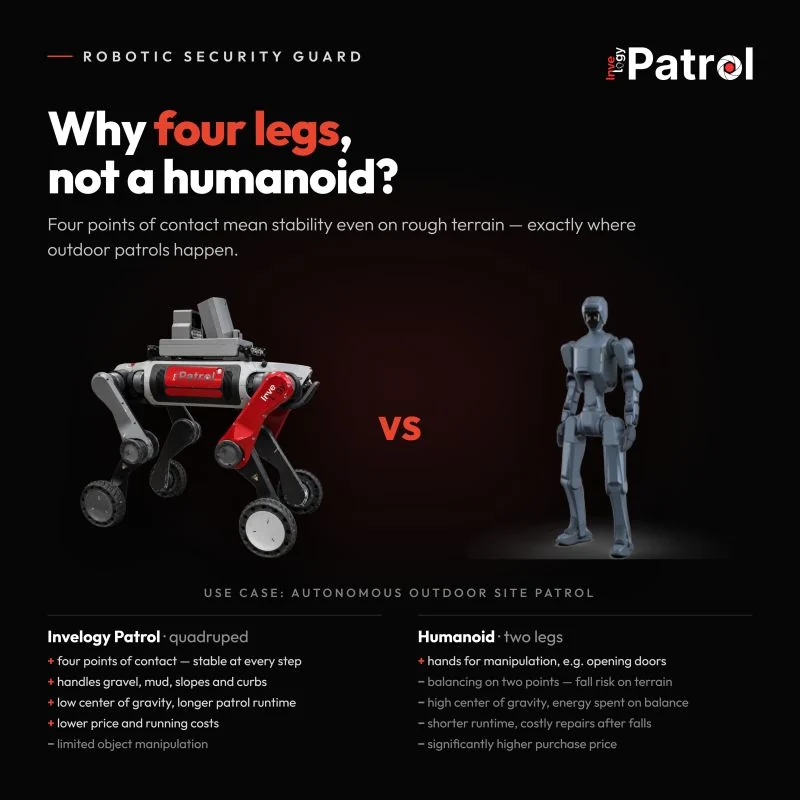
Industrial perimeters are rarely designed with mobile robots in mind. A patrol route may include gravel roads, muddy access tracks, slopes, kerbs and unfinished areas between facilities.
A robot may know where its next checkpoint is, but that means little if it cannot safely reach it. Reliable mobility is the foundation for everything else: autonomous route planning, onboard sensing, incident monitoring and remote operator oversight.
Our aim is not to claim that a single robot can handle any environment. It is to understand the practical limits of the platform, so future deployments can be designed around the realities of each site.
Mud and traction: Where the limits become visible
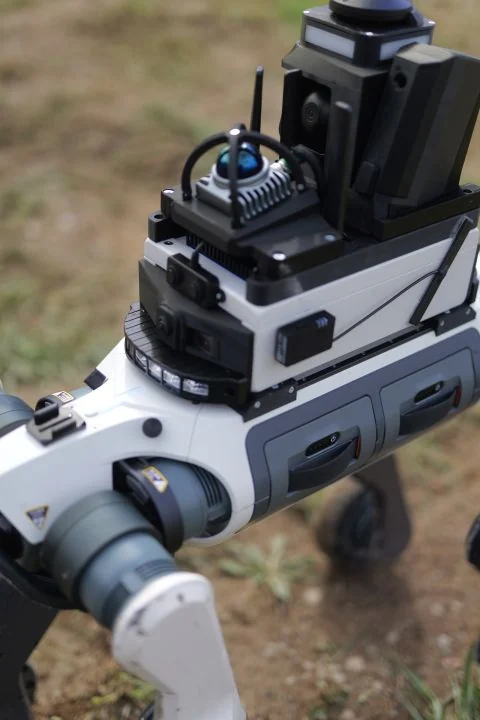
The muddy sections were among the most useful parts of the test. The M20 showed promising off-road mobility, while also making one improvement opportunity clear: better wheel grip on soft and slippery surfaces.
[IN-ARTICLE PHOTO – assets/invelogy-m20-muddy-wheels-closeup.jpg]
We are therefore working on an improved tyre tread pattern to increase traction, particularly in mud. For repeated outdoor patrols, such a mechanical improvement can be just as important as an advanced navigation algorithm. Software can select a route, but physical contact with the ground determines whether the robot can travel it safely.
Autonomous navigation: GNSS is a next step
Alongside mobility, we tested our navigation system in real outdoor conditions. This matters as we extend Invelogy Patrol beyond indoor and otherwise controlled environments to larger open sites.
One of our next development priorities is GNSS integration to complement our existing navigation methods. Satellite positioning alone, however, does not make a robot reliably autonomous. It must be combined with appropriate sensors, localisation and safe route planning.
We see this as an iterative engineering process, not a one-off performance record: test the system, understand its limits, make changes and return to the field.
Building the solution together with Smart Informatics
Working with Smart Informatics, our integration partner for the Czech market, allows us to connect technology development with local customer needs and practical deployment considerations.
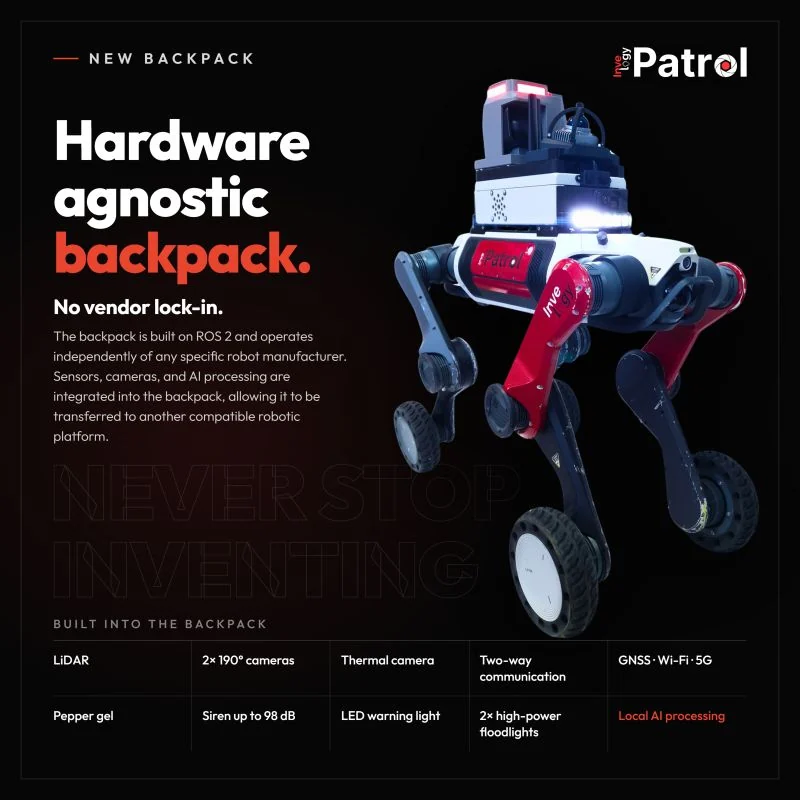
Invelogy focuses on the robotic platform, autonomy, security backpack and software. Smart Informatics brings local integration capabilities and market knowledge in the Czech Republic. Real-world testing gives both teams a shared understanding of what the technology can already do and what needs further development.
What comes next?
The test delivered encouraging mobility results and a clear development roadmap: refine the tyre tread, continue improving outdoor autonomous navigation, and advance GNSS integration.
This is how we are building Invelogy Patrol: through repeatable field tests that gradually turn promising robotics technology into a more dependable system for industrial and logistics-site security patrols.
Considering robotic patrols for your site? Get in touch with Invelogy. We would be glad to discuss your operating environment and the requirements a robotic security system would need to meet.
Photo gallery: Invelogy M20 field testing