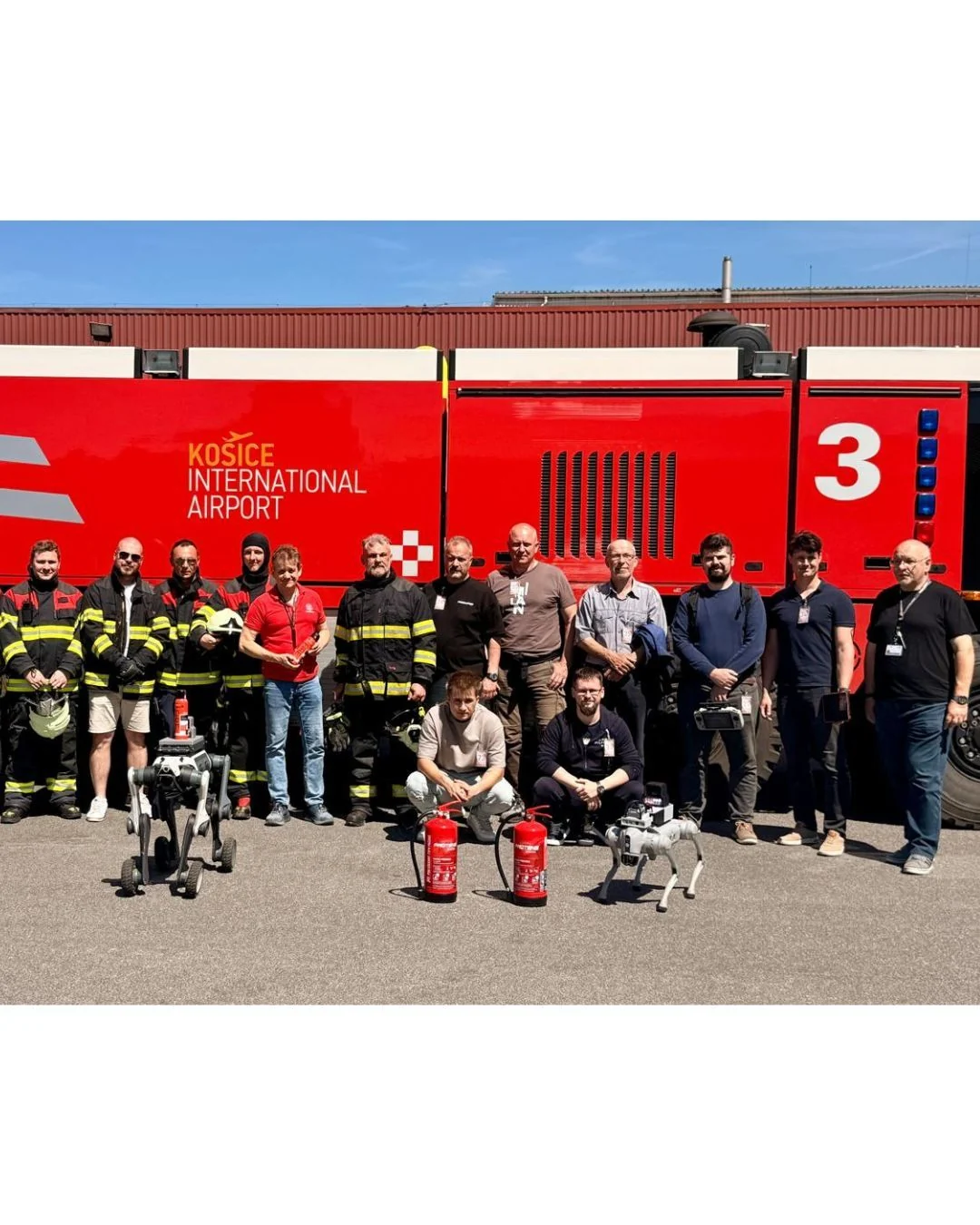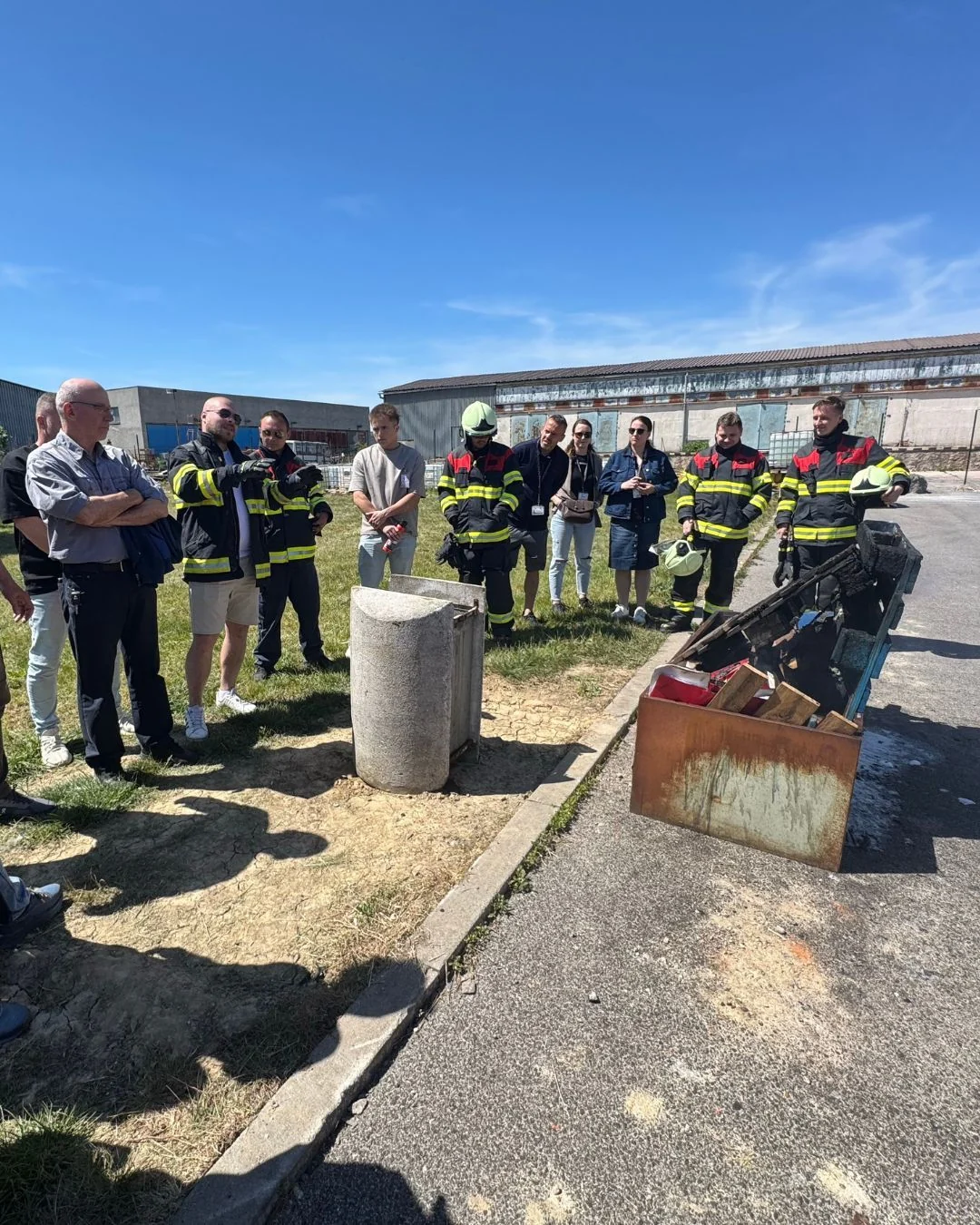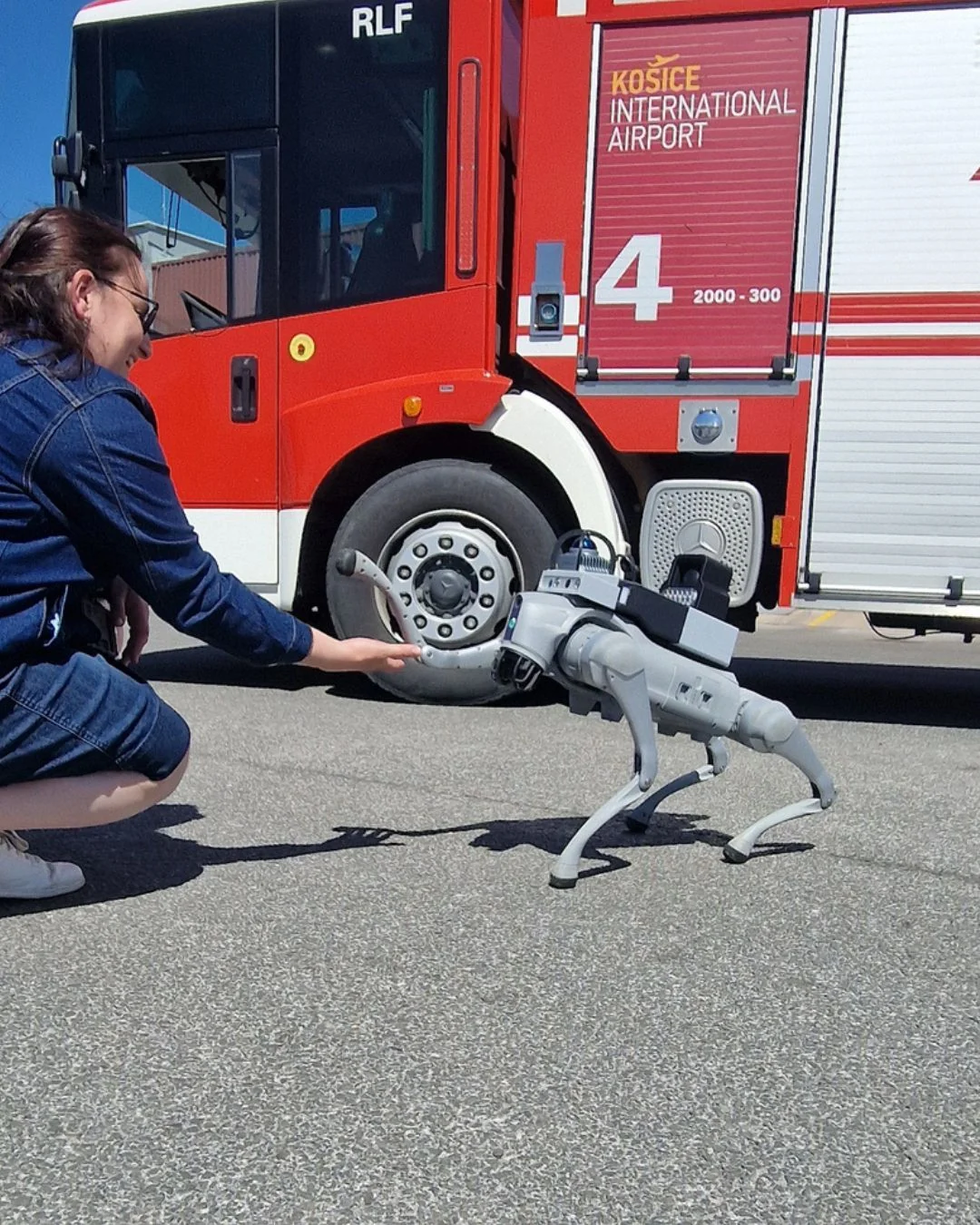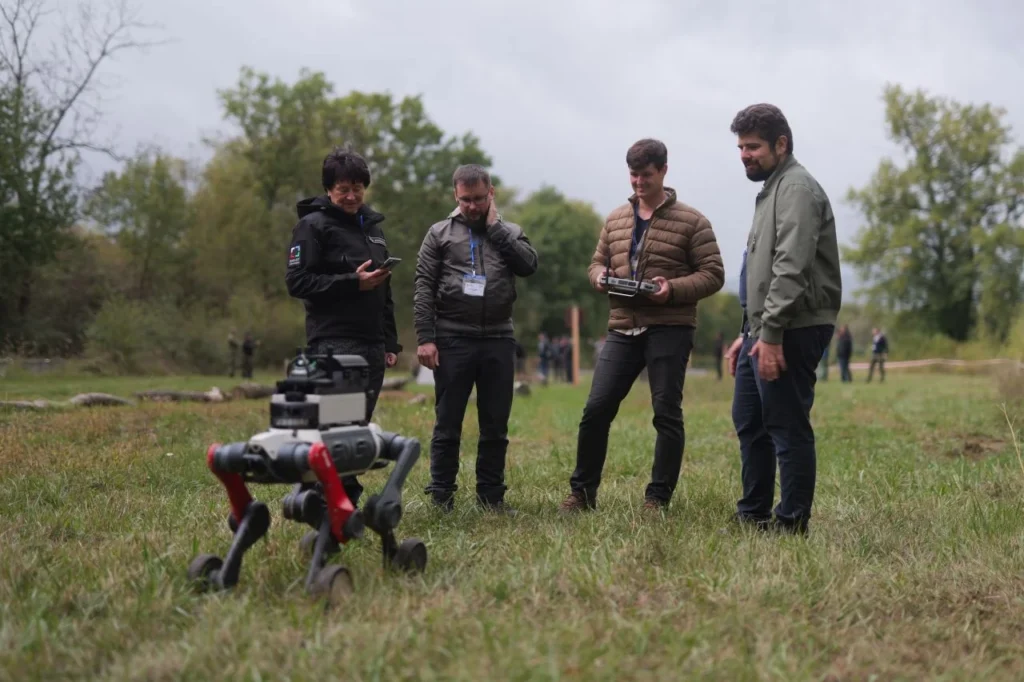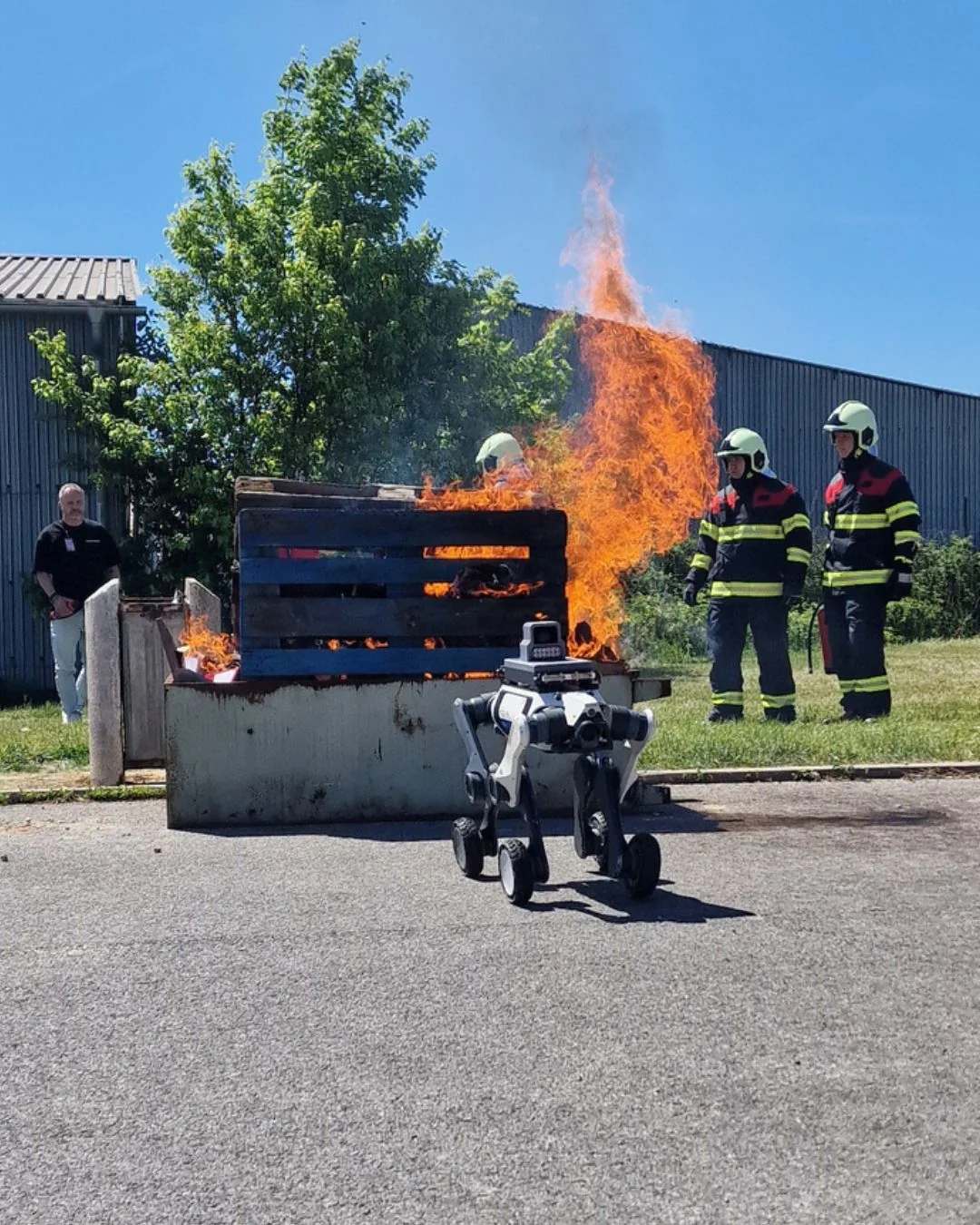
What if a robot could assess a dangerous area before a firefighter has to enter it? That question was at the heart of our visit to Košice Airport, where we met with firefighters to explore the potential of mobile robotic systems in high-risk situations. We also brought DEEP Robotics platforms into the field for demonstrations that included a simulated scenario involving open flames.
For us, the goal was not simply to capture impressive footage. We wanted to discuss practical challenges: how quickly a robot could reach an incident, what information it might provide to a response team, and what must be tested before operating around extreme heat.
The challenge of the first minutes
During a fire, industrial accident, or other emergency, an early understanding of the scene can make a significant difference. Response teams need to identify hazards, obstacles, and conditions before deciding how to proceed.
But entering an unfamiliar area can expose people to smoke, heat, unstable structures, and risks that may not yet be visible. In such situations, a mobile robot could become an additional reconnaissance tool—providing a remote view of the scene while trained professionals remain responsible for assessing the situation and making decisions.
Depending on its equipment, the robot could transmit live video and collect other sensor data. The value lies not in removing firefighters from the response, but in helping them approach the scene with better information.
What we explored at Košice Airport
Our discussions and field demonstrations focused on three practical areas.
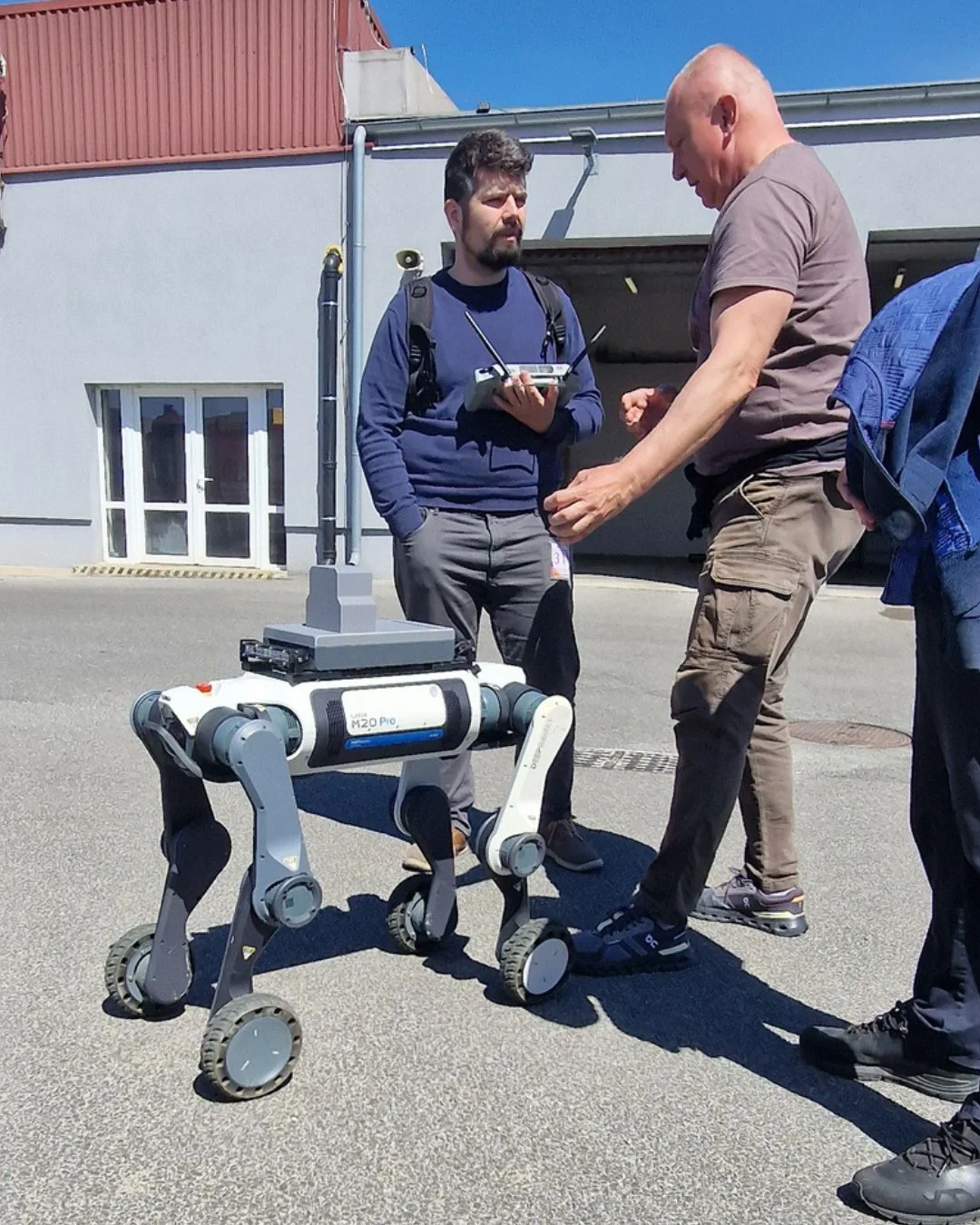
Mobility and deployment speed. A robot must be able to move across different surfaces, negotiate obstacles, and reach areas that matter during an incident. Performance in a controlled demonstration is useful, but real operating conditions can be far less predictable.
Heat exposure and system limitations. The scenario involving open flames allowed us to discuss how robotic platforms might behave near a heat source. However, a photograph or field demonstration does not establish a robot’s safe operating limits under sustained radiant heat. Deployment close to an active fire would require separate measurements, engineering assessments, and clear safety procedures.
Support during hazardous incidents. We considered how a robot might assist with initial reconnaissance, remote observation, and information gathering before people enter a potentially dangerous zone.
The discussions highlighted an important distinction: a promising technology is not automatically a field-ready emergency response system.
Where mobile robots could make a difference
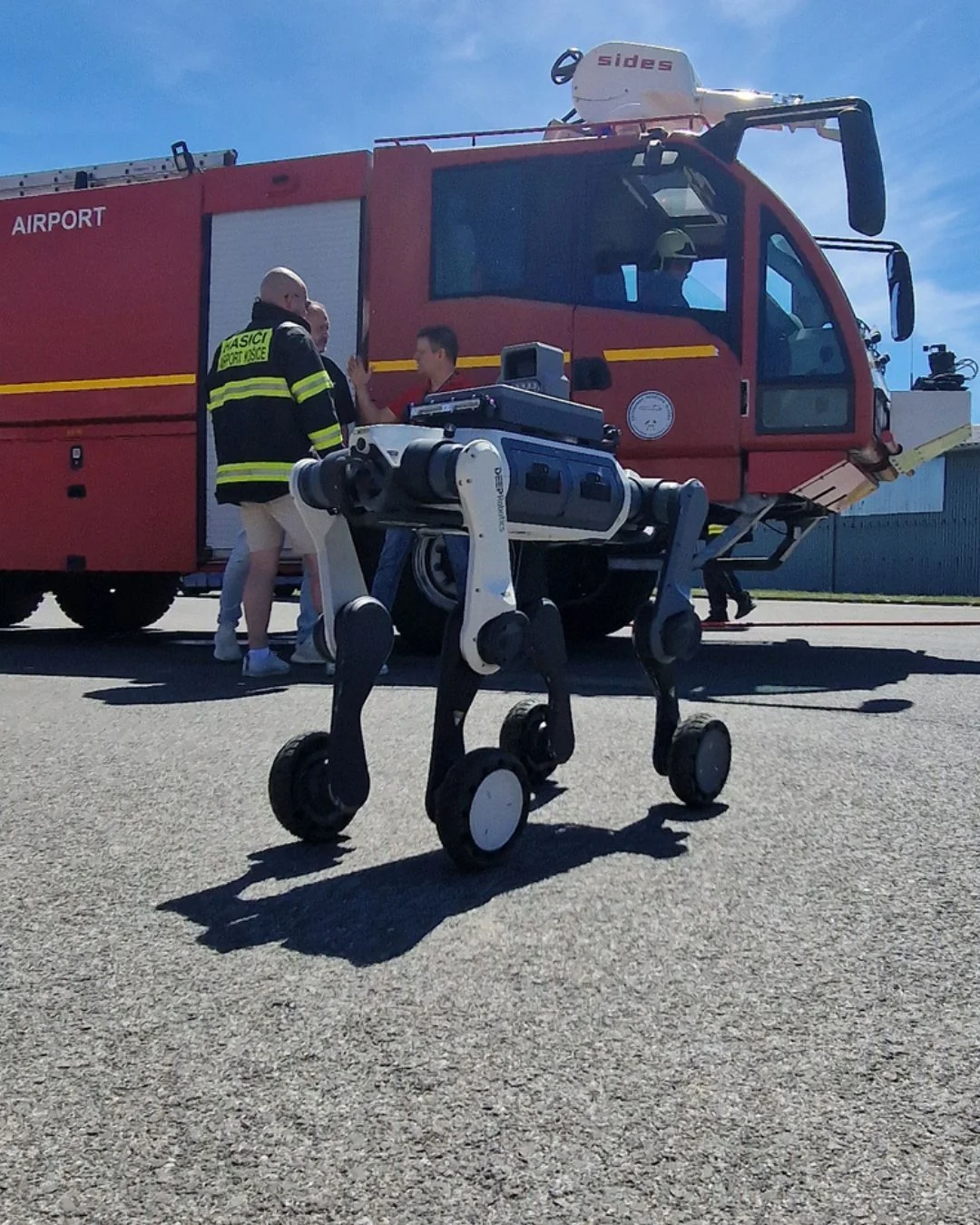
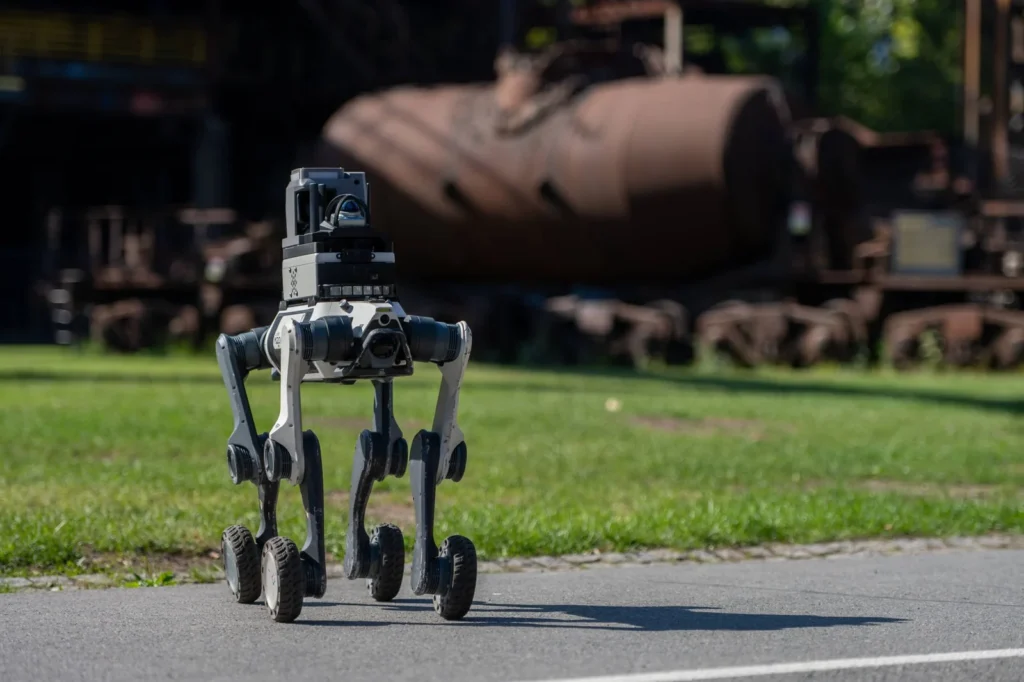
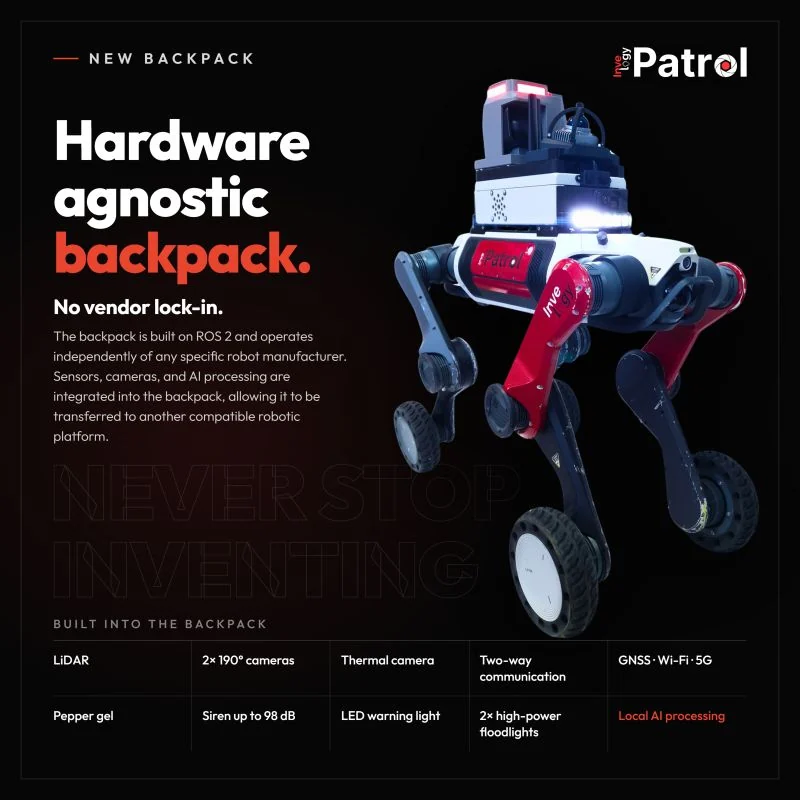
A quadruped robot provides a mobile platform for carrying relevant equipment. Depending on the configuration, that could include visible-light cameras, thermal imaging, communications hardware, or environmental sensors.
Potential applications include rapid visual assessment, checking difficult-to-reach areas, and collecting information to support situational awareness. Such capabilities may be particularly relevant when conditions are unclear or access would put responders at unnecessary risk.
Another possibility worth exploring is carrying selected firefighting or rescue equipment. That would require purpose-built mounts, payload validation, and dedicated trials. It is a future application—not a capability established by our airport demonstration.
The objective is not to replace firefighters. It is to give them another way to gather information while reducing unnecessary exposure. Professional crews remain in charge of response decisions and safety.
Applying robotics beyond perimeter security
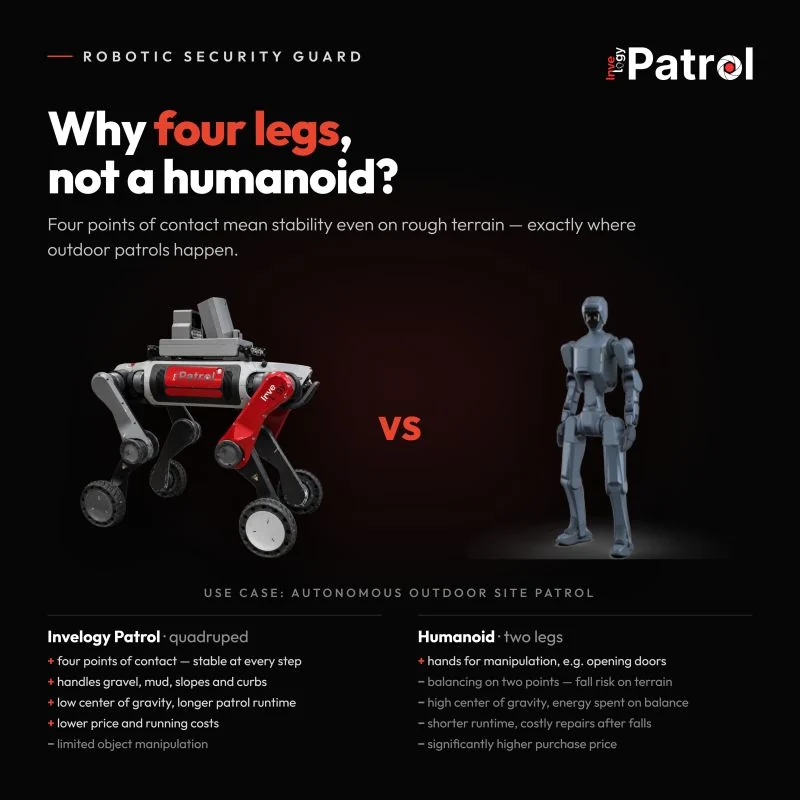
At Invelogy, our core focus is autonomous security and industrial monitoring. We develop systems that combine mobile platforms, sensors, software, and remote operation to support real-world tasks.
Many of the building blocks that matter in security—mobility, visual monitoring, communications, and reliable control—may also be useful in emergency-response contexts. Yet each application comes with its own operating requirements and safety constraints.
Meeting the firefighters at Košice Airport helped us examine these requirements from the perspective of people who deal with operational risk every day. We also opened discussions about other potential uses for robotic systems at the airport. Those ideas remain exploratory, and we will share further developments when there is something concrete to announce.
Real-world testing is where questions become clearer
There is a significant gap between a robot completing a field demonstration and a system being ready for deployment in an emergency. Reliable communications, predictable behavior, sensor performance, and clearly defined environmental limits all matter.
That is why we take our technology outside the lab and seek feedback from professionals. Their experience helps us prioritize the capabilities that would make a meaningful difference in practice.
Our thanks go to the firefighters and representatives of Košice Airport for the discussions and the opportunity to explore robotics from an operational perspective.
Invelogy is an official DEEP Robotics distributor for Slovakia and the Czech Republic. If you are considering mobile robotics for security, industrial inspection, or specialized operations, we would be glad to discuss your use case.
Photo Gallery: Field Testing at Košice Airport