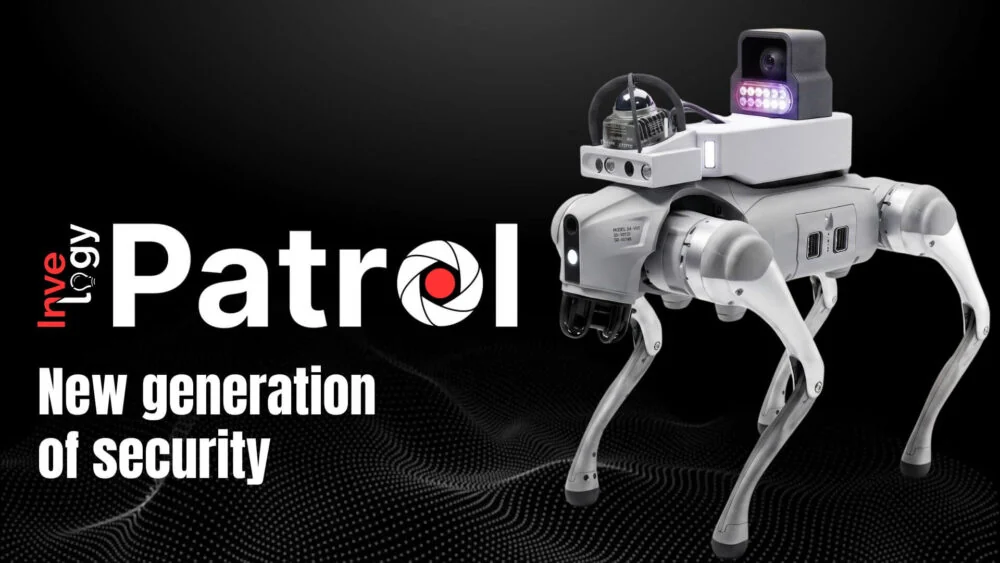
Physical security services have changed surprisingly little over the past few decades. Most facilities still rely on a combination of CCTV, alarm systems and on-site security guards carrying out routine patrols.
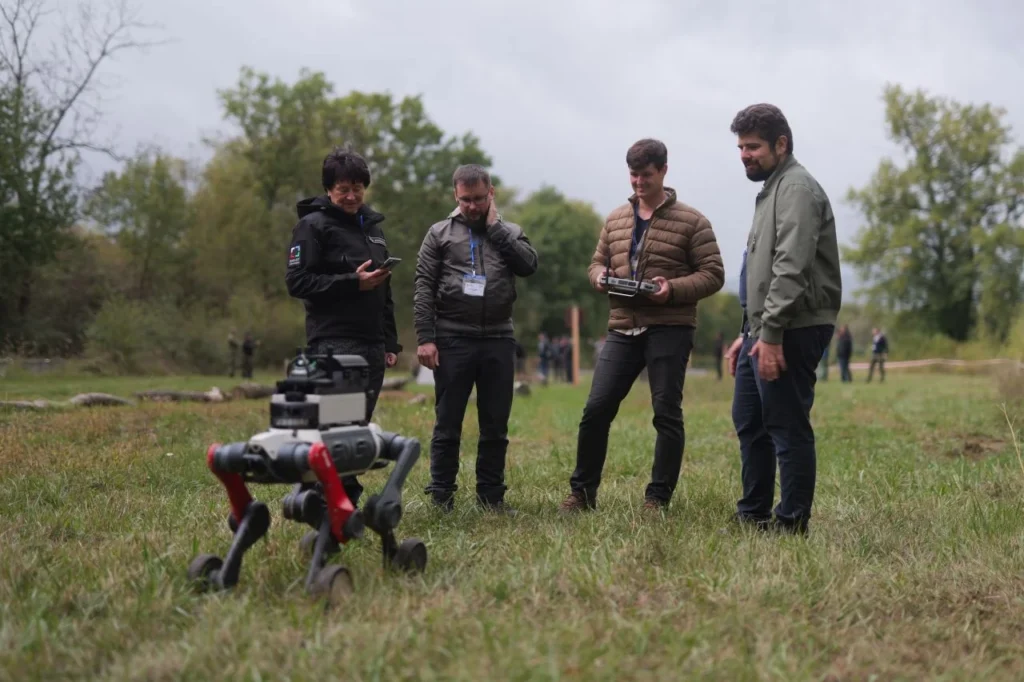
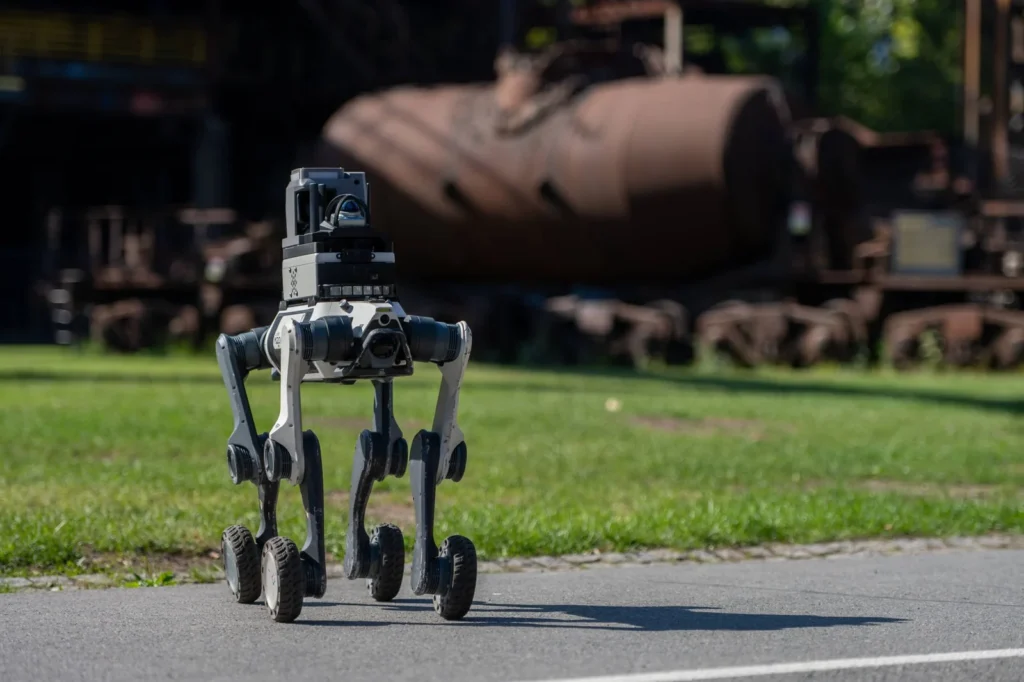
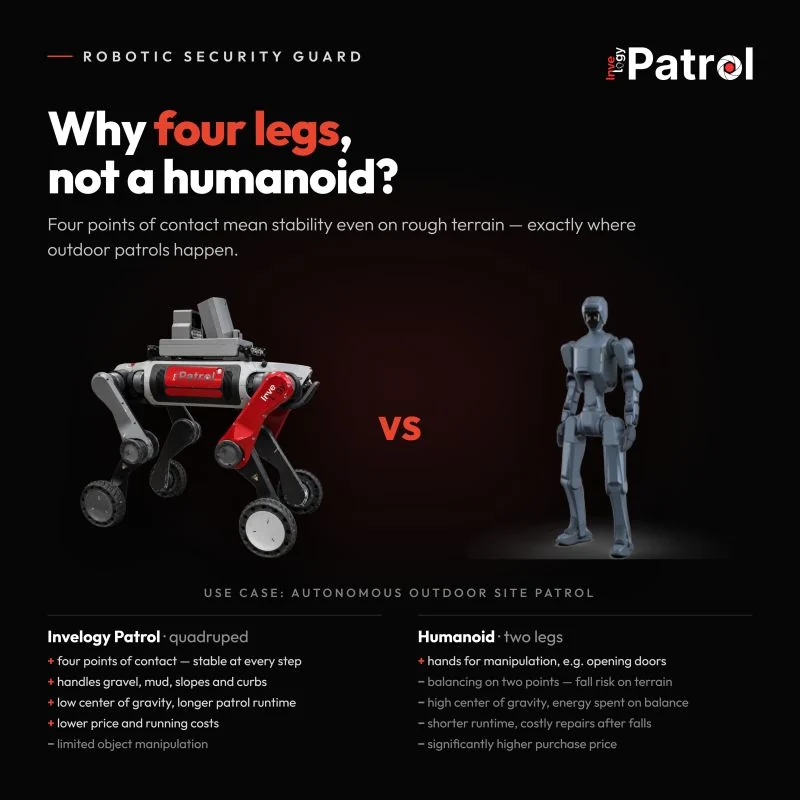
Now, a new technology is entering the security industry: autonomous robotic patrols. One such solution is Invelogy Patrol, a system designed to automate routine security tasks and support existing security teams.
What does a traditional security guard do?
A security guard’s responsibilities include patrolling the premises, checking access points, responding to alarms, investigating suspicious activity and staying in contact with the control room.
In practice, however, people are naturally affected by fatigue, lapses in concentration and the tendency to overlook things during repetitive tasks.
How does Invelogy Patrol work?
Invelogy Patrol is an autonomous robotic security system capable of navigating a site without relying on GPS.
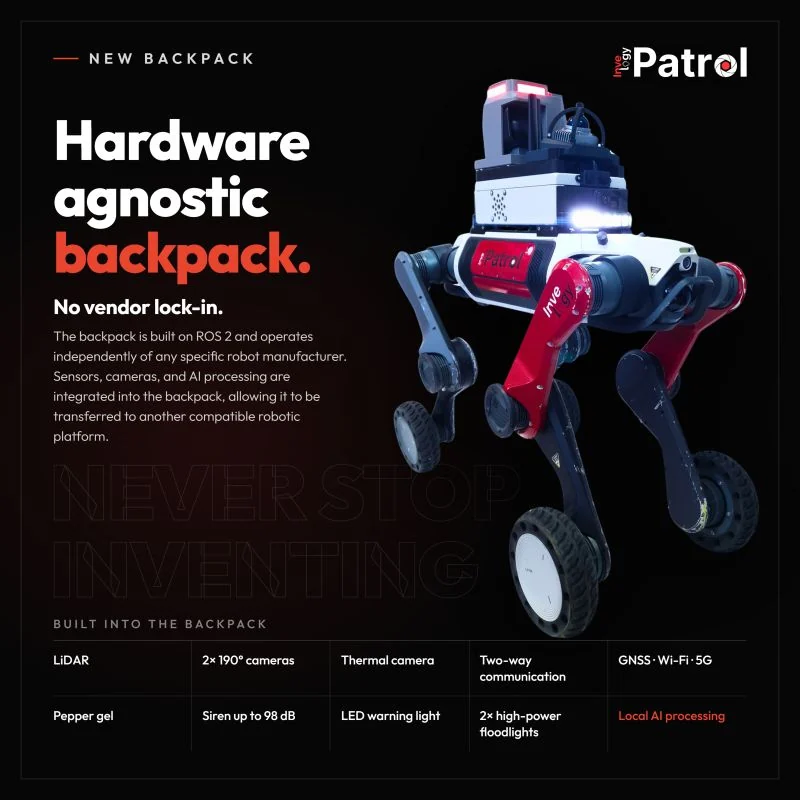
Using LiDAR sensors, cameras, thermal imaging and proprietary software, it carries out patrols, monitors designated areas and alerts a remote operator when needed.
Side-by-side comparison
| Feature | Security guard | Invelogy Patrol |
|---|---|---|
| Availability | 8–12 hours per shift | 24/7 |
| Fatigue | Yes | No |
| Sick leave / holidays | Yes | No |
| Patrol consistency | Limited | Very high |
| Patrols per night | 2–4 | 8–12 |
| Reporting and records | Manual | Automatic |
| Thermal imaging | Usually not available | Yes |
| Remote monitoring | Limited | Yes |
| Investigating suspicious activity | Requires a person to enter a potentially dangerous area | Enables operators to assess a situation remotely before deploying a response team |
| Operating costs | Increase with hours worked | Scalable |
Where does the robot have the advantage?
Consistency
A robot does not get tired and can carry out patrols at precisely scheduled intervals.
More frequent patrols
It can complete significantly more patrols during a night shift than a typical security guard.
A digital audit trail
Every patrol can be logged, including the time, route, photographs and any incidents detected.
Keeping people safe
A robot can investigate a suspicious situation first, helping reduce the risk to security personnel.
Will robots replace security guards?
Not entirely. The most likely future is one in which people and robots work together.
The robot will handle
- routine patrols
- monitoring large sites
- data collection
- initial incident assessment
Security personnel will focus on
- decision-making
- communication
- incident management
- on-site response
Conclusion
The security industry is facing rising labour costs and a shortage of qualified staff. At the same time, customers expect better protection and faster responses to incidents.
Invelogy Patrol offers a new approach to site security: autonomous robotic patrols that can operate around the clock, conduct checks more frequently and provide operators with accurate, real-time information.
The future of security belongs neither to people alone nor to robots alone. It belongs to both working together.
Curious how much robotic patrols would save at your site? Try the savings calculator or book a demo.