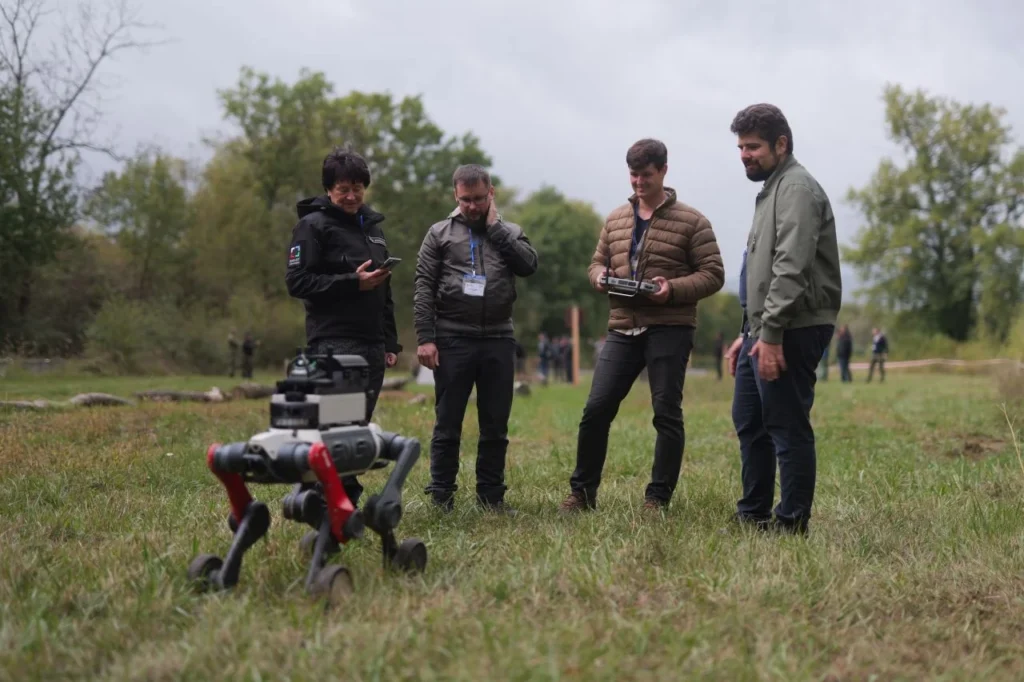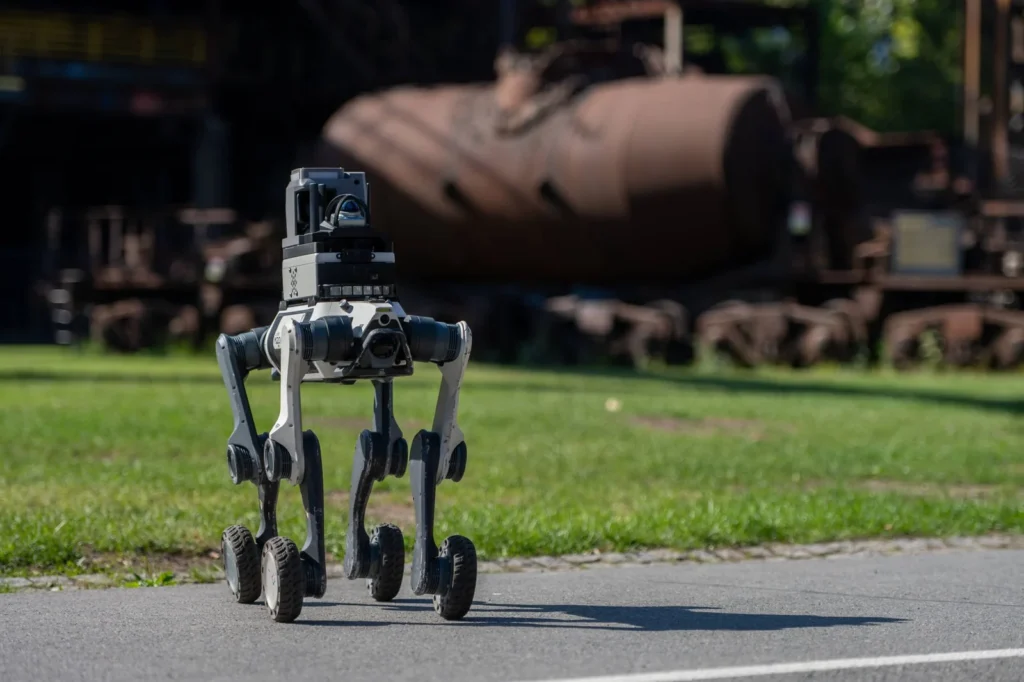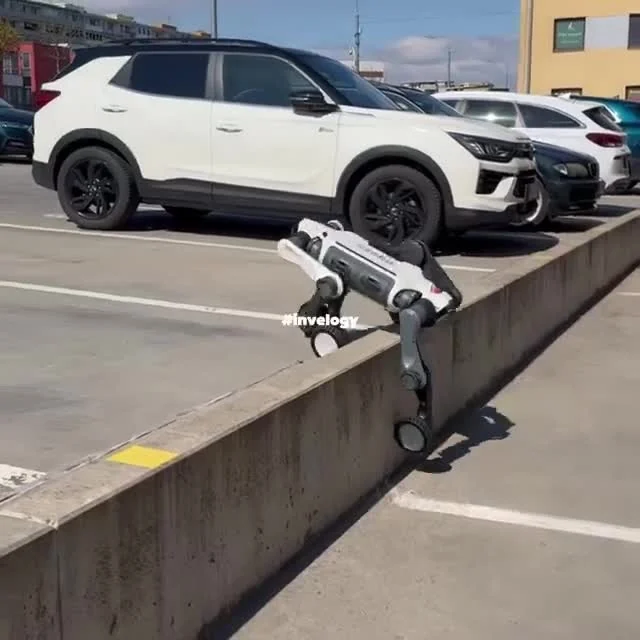
What happens when a mobile robot encounters an obstacle that would stop a conventional wheeled platform? We took the DEEP Robotics M20 out of the workshop and tested its mobility against a concrete ledge approximately 70 cm high.
This is not a simulation or AI-generated video. It is footage from a real test of our robotic platform, showing how the M20 negotiates a substantial change in height. At Invelogy, tests like this are an essential part of developing robots for practical security and industrial applications.
The test: A concrete ledge around 70 cm high
We selected a concrete ledge separating two levels of a parking area. According to our test, the obstacle was approximately 70 cm high. The M20 approached the edge, adjusted the position of its legs and climbed onto the higher level.
This is where an articulated, wheel-legged robot differs from a conventional mobile base. Motor power alone is not enough. Negotiating an obstacle also requires coordinated movement, reliable ground contact and stability as the robot shifts its weight.
Watch the field test:
Why obstacle handling matters in the real world
Industrial sites, logistics centres and outdoor facilities are rarely perfectly flat. A patrol route may include kerbs, ramps, steps, uneven surfaces and unexpected obstacles.
For a mobile robot to perform a useful task, it must navigate these environments in a predictable way. Mobility is not simply a demonstration feature; it is a practical requirement for real-world deployment.
More capable locomotion can help robots carry out routine inspections, document infrastructure conditions and reach areas inaccessible to simpler wheeled vehicles. It does not mean every obstacle can be crossed. Surface grip, geometry, payload and operating conditions all affect the outcome.
What makes the DEEP Robotics M20 different
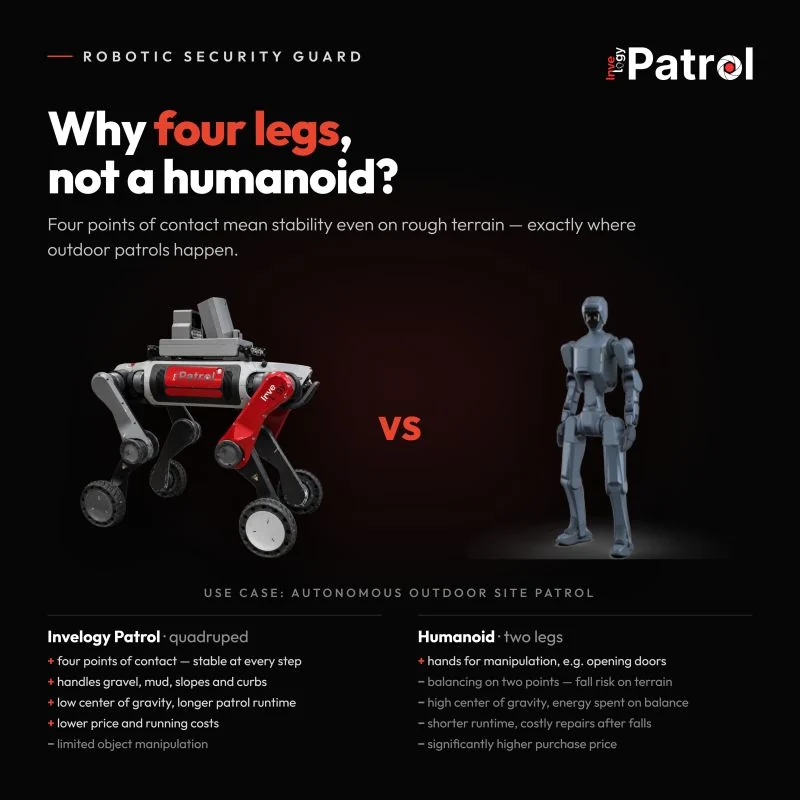
The DEEP Robotics M20 is a wheel-legged robotic platform. It combines efficient wheeled movement on suitable surfaces with articulated legs that can adapt to uneven terrain and more demanding obstacles.
That versatility is particularly interesting for our work. A single platform may be able to operate across a range of site conditions without switching between entirely different robot types.
It is important to distinguish locomotion performance from autonomy. This video documents an obstacle-handling test; it does not, by itself, establish that the manoeuvre was completed with fully autonomous navigation, without operator input, or that the same performance is guaranteed in every configuration. Autonomous route planning and safe navigation are separate capabilities that require their own validation.
From field testing to practical applications
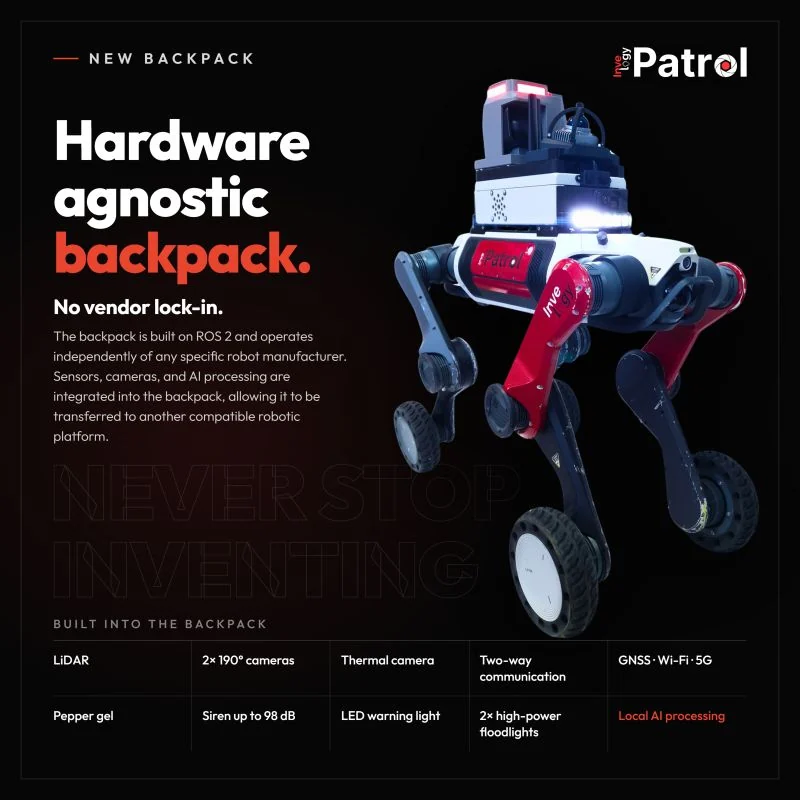
At Invelogy, we combine mobile robots, sensors and our own software to develop systems for operational use. Through Invelogy Patrol, we are working on robotic site monitoring and security patrols for industrial and commercial environments.
Mobility testing helps us identify where a platform performs well, which limitations matter in practice and how a site should be assessed before deployment. Real-world testing is also a valuable input for route design, operating procedures and safety requirements.
Clearing one 70 cm obstacle is a meaningful result for that particular test—not a blanket guarantee of performance. Actual deployments still require evaluation of the full route, repeatability, personnel safety and the robot’s response to unexpected conditions.
Build, test, learn, repeat
Robotics development cannot happen entirely at a desk. Real surfaces, physical obstacles and observable results reveal details that specifications alone cannot capture. That is why we keep taking our platforms into the field and testing them in the kinds of conditions our customers may face.
This M20 test gave our team another useful data point as we continue developing robotic security and inspection solutions.
Considering robotic patrols or industrial inspections for your facility? Get in touch with Invelogy to discuss your environment and the type of robotic platform that may fit your needs.