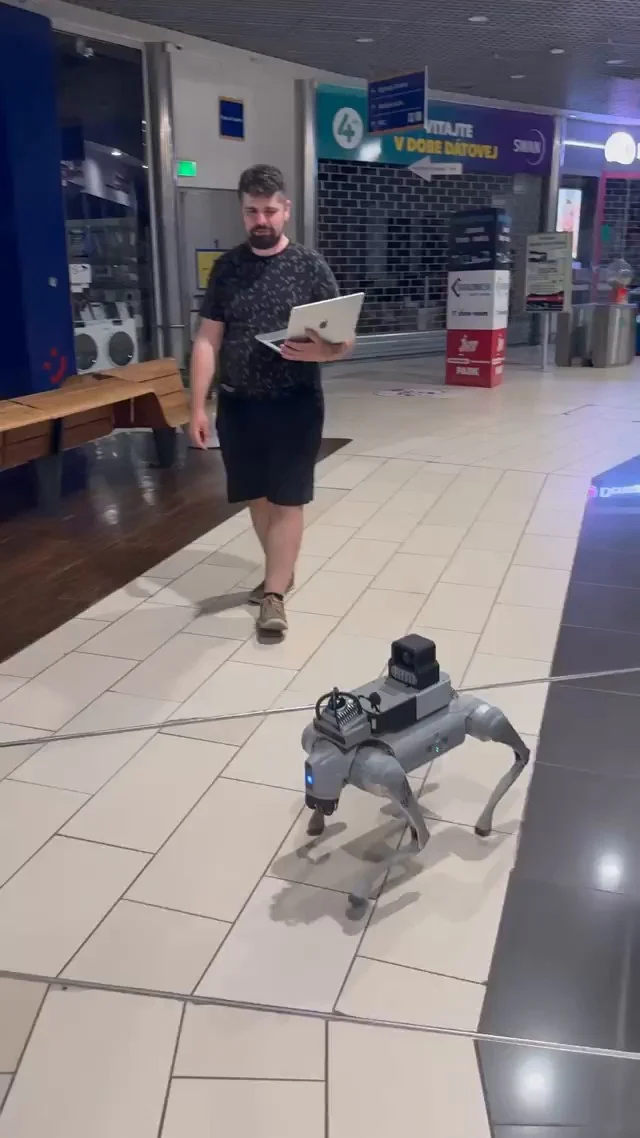
Autonomous security does not begin with a siren or a thermal camera. It begins with a robot that can reliably get to the right place. On 9 June 2026, we put that capability to the test in a large shopping centre in Košice, Slovakia.
Our team mapped approximately 24,000 m² of indoor space and planned an autonomous patrol route exceeding 500 metres. We deliberately placed several checkpoints close to glass storefronts to see how our navigation system would perform in a less forgiving environment.
Why real shopping centres make demanding test environments
A controlled lab is predictable. A working building is not. Long corridors, open atriums, pillars, reflective glass and unexpected obstacles create challenges that are difficult to reproduce in a small testing area.
For a security robot, moving around is only the starting point. It needs to understand where it is, reach designated checkpoints and respond appropriately to obstacles. Reliable autonomous patrols depend on all three.
Shopping centres offer a useful test setting because they combine scale, varied layouts and glass surfaces that can complicate a robot’s perception of its surroundings.
From a digital map to a 500-metre-plus patrol route
We first created a navigation map covering a substantial part of the building. We then defined dozens of patrol checkpoints for the robot to visit. Several were intentionally positioned near glass shopfronts, where reflections and transparent surfaces can challenge sensors and localisation systems.
The robot completed an autonomous route of more than 500 metres. We also tested dynamic obstacle avoidance and navigation between checkpoints without relying on GPS.
The results demonstrated that our system can carry out an extended autonomous route in a real indoor environment. Just as importantly, the test gave us clear indications of what still needs improving before repeated operational use.
GPS-free navigation with LiDAR and SLAM
GPS is not a dependable basis for precise indoor navigation. Invelogy Patrol uses LiDAR and SLAM (simultaneous localisation and mapping) to estimate the robot’s position relative to its map and plan a route towards the next checkpoint.
Good navigation depends on the complete system working together: localisation, path planning, obstacle detection and the ability to adjust as the environment changes. Glass storefronts were a deliberate part of our test precisely because they expose weaknesses that may remain hidden in ideal conditions.
A successful field test is not a guarantee of flawless performance in every building. It is, however, a meaningful milestone supported by real-world data we can use to improve the software.
What we learned
We successfully mapped a large indoor area, defined dozens of checkpoints and tested autonomous movement over a route longer than half a kilometre. The robot also demonstrated obstacle avoidance in an environment that had not been specially arranged for it.
We identified areas for further refinement as well. This is how we build: test in the field, record the results, improve the software and test again. Dependable security technology comes from repeated validation, not a single impressive demonstration.
The foundation of a new approach to site security
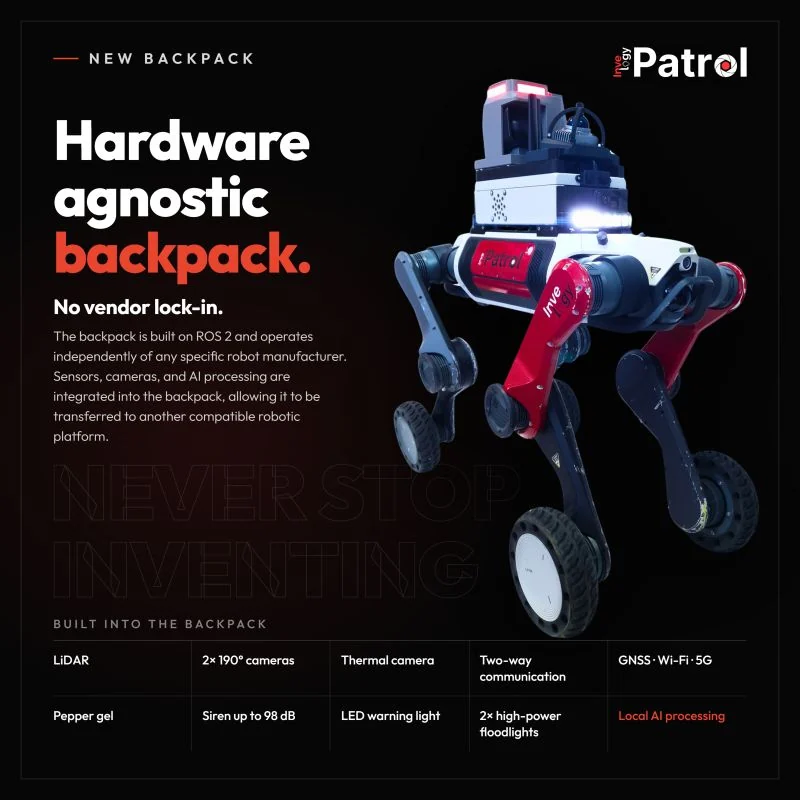
Navigation is only one part of Invelogy Patrol, but it underpins everything else. We combine robotic mobility with cameras, warning lights, sirens and software for managing and monitoring patrols. Our goal is to enable regular site checks while keeping a human operator informed when the system detects something that may require attention.
We are also exploring additional response capabilities under human control. One option under consideration is pepper gel; any potential use would require separate legal, safety and operational assessment. It was not part of this navigation test.
Our longer-term ambition is to make robotic security more accessible to small and medium-sized businesses—not by replacing human judgement, but by improving the consistency and visibility of site monitoring.
More than 500 metres closer to practical deployment
Approximately 24,000 m² mapped and more than 500 metres of autonomous navigation mark important progress for our team. Equally valuable are the lessons we can build into the next iteration of Invelogy Patrol.
If you operate a shopping centre, industrial site or logistics facility and want to explore autonomous security patrols, get in touch with our team. We would be pleased to discuss what robotic monitoring could—and could not—do in your environment.