In September 2025, we reached an important milestone at Invelogy: we successfully adapted the navigation system originally developed for our four-wheeled SecuBot to the Unitree Go2 Pro quadruped robot.
This was more than a change of chassis. We wanted to find out whether our mapping and navigation work could be transferred to a robot that moves in a fundamentally different way. A successful outdoor test gave us an encouraging answer.
From a wheeled prototype to a quadruped
SecuBot played an important role in our development journey. It gave us a platform for working on some of the fundamentals: building a map of an environment, defining a route and getting the robot to a designated destination.
A quadruped brings different capabilities and challenges. Instead of relying on wheels, it uses articulated legs to move across surfaces and negotiate obstacles that can be difficult for a conventional wheeled chassis.
That meant adapting our navigation system to a new platform and testing the result outside the lab. The key outcome was straightforward: navigation principles developed for SecuBot could also be applied to the Unitree Go2 Pro.
It was a meaningful step toward software that is not tied to a single type of robot.
How the navigation system works
At a high level, the workflow has three parts:
- LiDAR mapping. The sensor measures the surroundings, and those measurements are used to build a map of the robot’s operating area.
- Route definition. We select target waypoints in the map and specify where the robot should travel.
- Navigation. Using its map and sensor input, the robot moves toward those targets without an operator manually controlling every movement.
This test focused on the transfer and operation of the navigation system. Completing a route is not the same as delivering a fully autonomous security service, but reliable navigation is one of its essential building blocks.
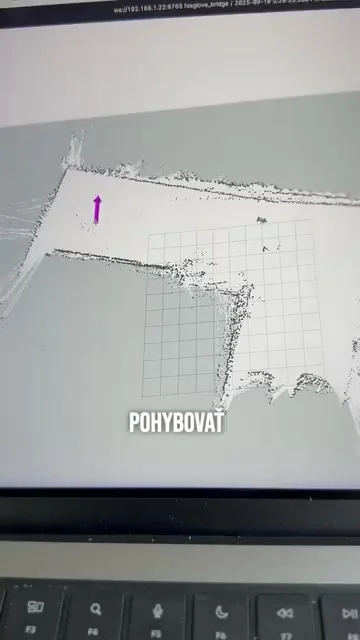
Outdoor testing: Paving, a step and grass
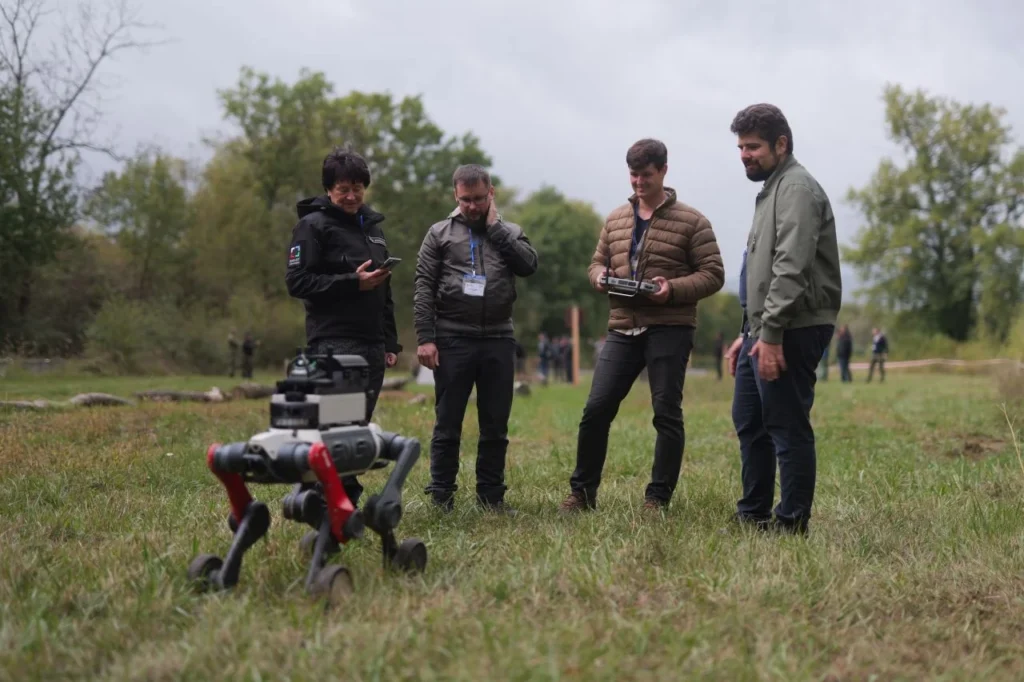
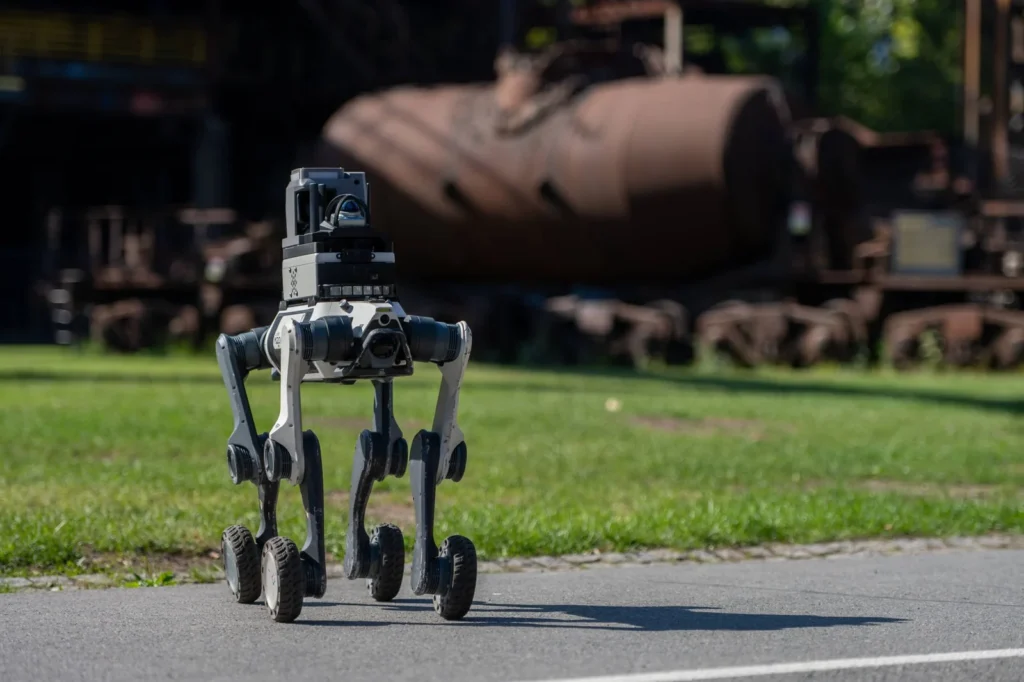
The video shows the mapping interface, waypoints being set and the Unitree Go2 Pro moving in an outdoor environment. We tested it on paved ground, across a low step and on grass.
Real facilities rarely offer a perfectly flat, predictable floor. An inspection or security robot needs to operate in the types of spaces where it will actually be deployed, with changing surfaces and routes designed around the site’s needs.
Watch the September 2025 test footage:
Why cross-platform navigation matters
Our goal is not to start from scratch each time we evaluate a new robot. The mobile platform provides locomotion; our work also lies in mapping, navigation and connecting robotics with practical security functions.
Bringing our navigation system from SecuBot to the Unitree Go2 Pro showed that this approach can work across different types of mobility. It does not mean the software will run unchanged on any robot. It means we can adapt the system to another platform while building on what we have already developed.
An important step towards Invelogy Patrol
Before an autonomous security robot can carry out meaningful patrols, it needs to know where it is and where it is supposed to go. That foundation supports further work on repeatable patrol routes, sensor integration, event detection and operator tools.
Our 11 September 2025 test was one of those foundational steps. It demonstrated how technology first explored on SecuBot could find a new application on a four-legged robot.
If you manage an industrial site, warehouse or large facility and want to explore autonomous robotic patrols, get in touch with Invelogy. We would be happy to discuss a realistic test scenario for your environment.
Original post and video
The original demonstration was published by Invelogy on 11 September 2025: SecuBot navigation transferred to the Unitree Go2 Pro.