Getting an inspection robot from point A to point B is only part of the challenge. What matters just as much is what the robot can observe along the way. That is why we equipped our original four-wheeled SecuBot with two new sensors: a pan-tilt-zoom (PTZ) camera with illumination and a thermal camera.
This development stage marked a step beyond mobility alone. We were building a robotic platform capable of collecting both visual and temperature-related information. The videos below show the hardware, imaging capabilities and real-world terrain testing.
PTZ camera: a closer look without moving the robot
A PTZ camera allows the viewing direction to be adjusted independently of the robot’s movement. During an inspection, the operator can focus on a specific component or area while the robot remains stationary. Night-vision capability and built-in illumination also improve visibility in low-light conditions.
This opens up practical possibilities for checking equipment, inspecting the area around pipelines and monitoring sections of a facility that would be difficult to cover with a fixed camera alone.
Thermal imaging: information beyond visible light
The second addition was a thermal camera with a stated measurement range of −50°C to +500°C. Thermal imaging makes temperature differences visible, potentially helping operators spot unusually hot components or other anomalies.
Possible applications include inspections of pipes, electrical cabinets and mechanical systems. A thermal image does not, by itself, diagnose a fault: reliable interpretation also depends on measurement conditions, surface properties and the specific use case.
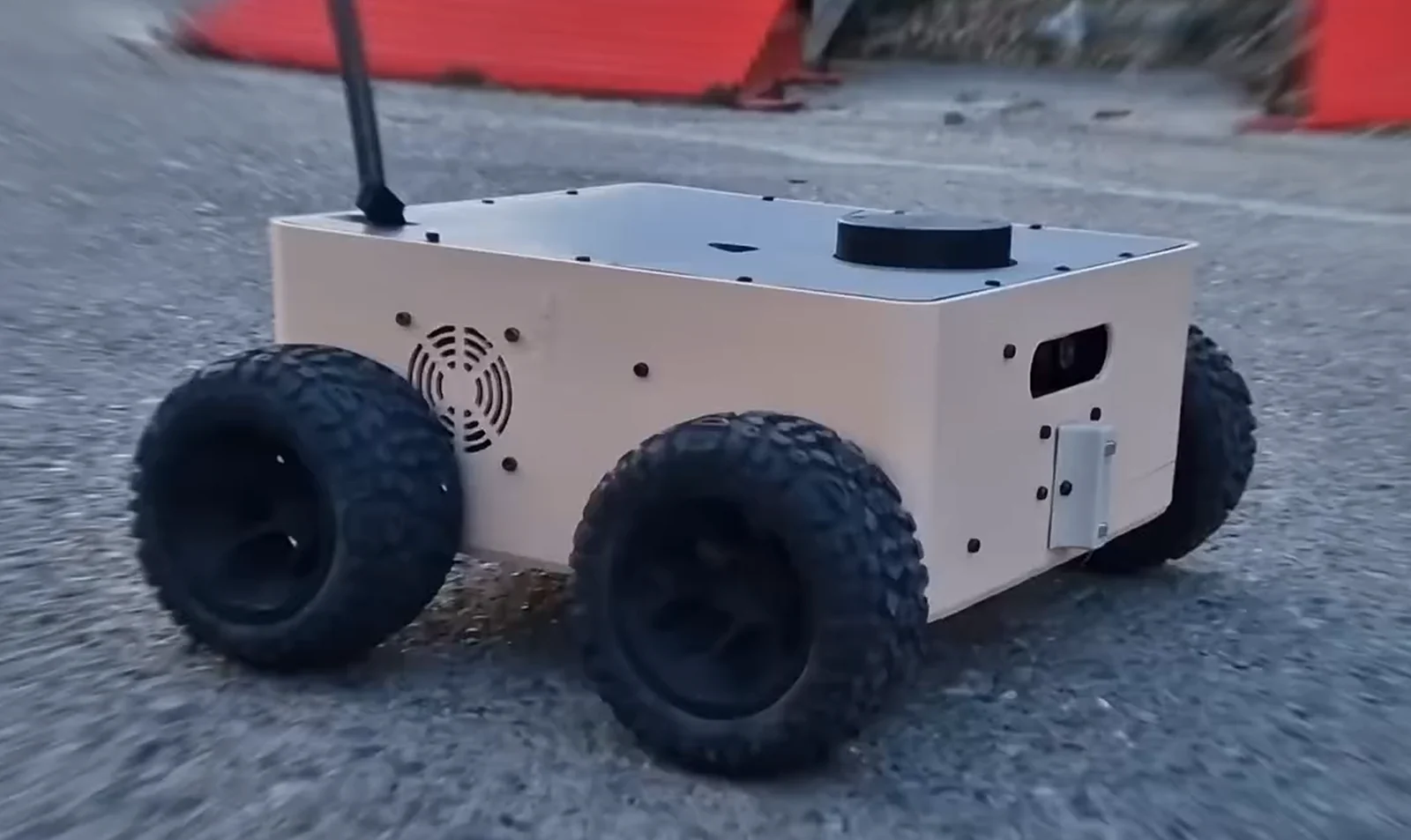
Three short videos from development and testing
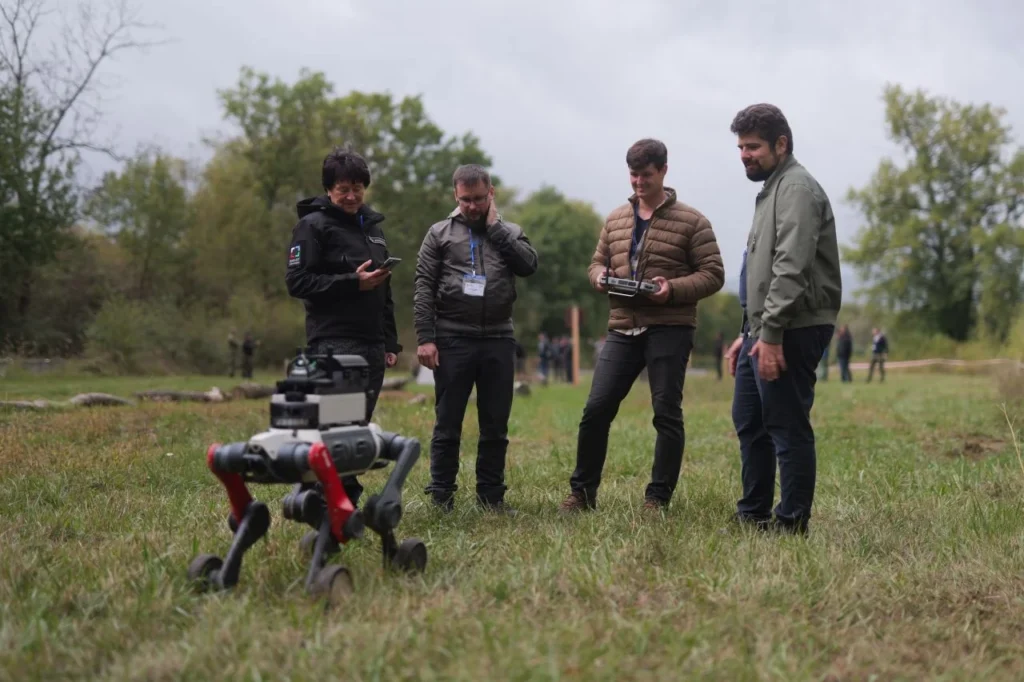
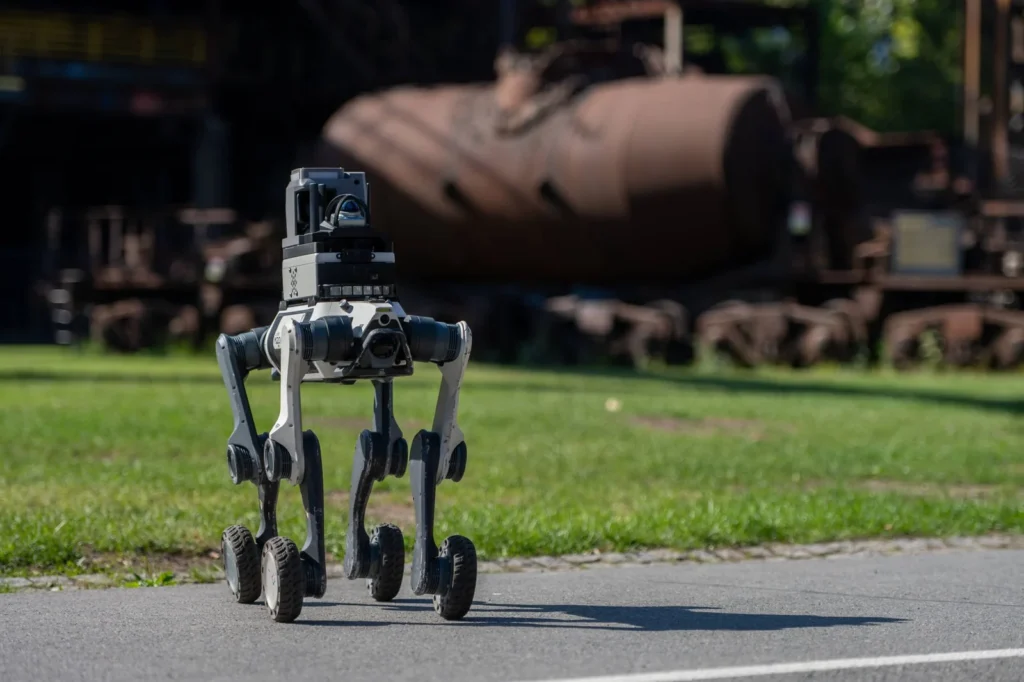
The following clips cover different aspects of the four-wheeled platform: the PTZ camera installation, thermal imaging and the robot’s ability to move over uneven outdoor ground.
Sensors are only the beginning
Every new device creates engineering work beyond the mounting bracket: power delivery, communications, data processing and software integration. For us, adding these two cameras was more than a hardware upgrade. It was another step towards a connected system in which mobility, sensing and software work together.
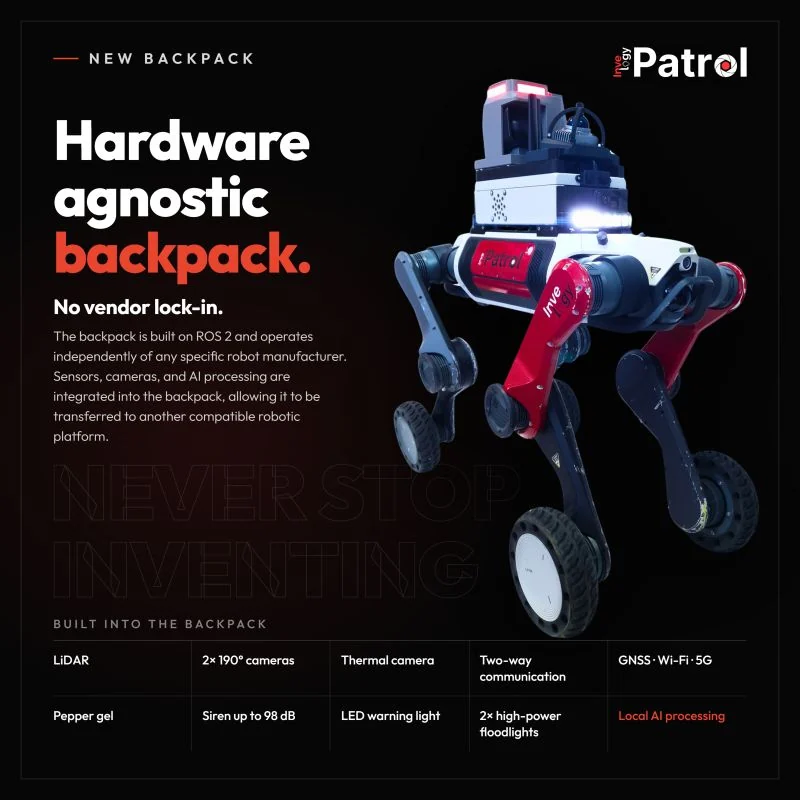
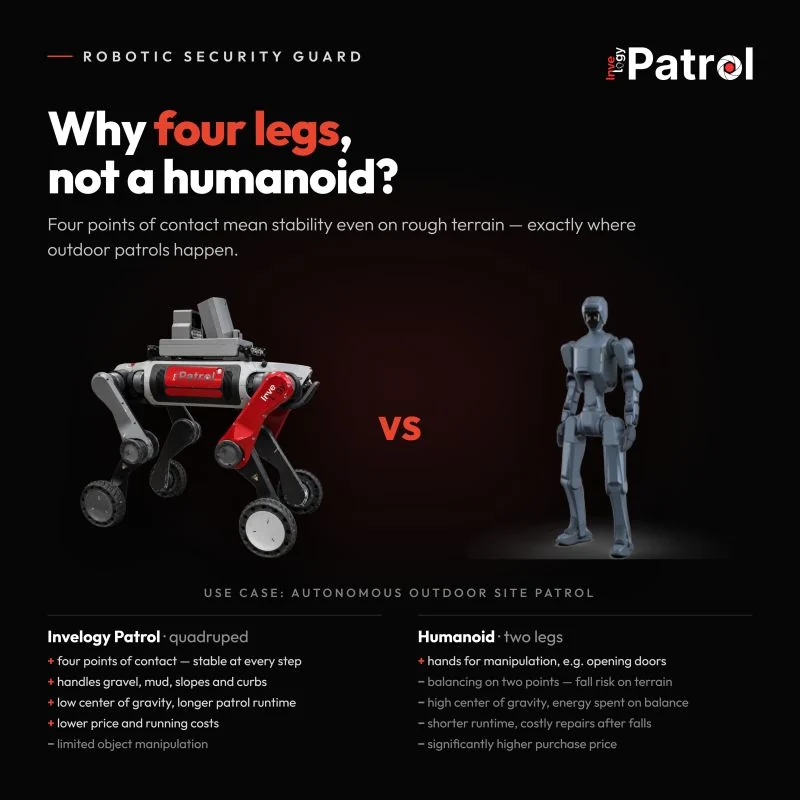
The lessons learned from the four-wheeled SecuBot helped shape our later work on Invelogy’s autonomous robotic systems. We continue to build on that foundation as we develop solutions for security patrols and technical inspections.
Exploring robotic inspections or site monitoring for your business? Contact the Invelogy team to discuss a practical deployment scenario.